AsianScientist (Sept. 09, 2026) – The ocean is the planet’s largest carbon reservoir, absorbing about 30 percent of the carbon dioxide emitted by human activity. Just as water naturally refills a large container when some is removed, removing carbon dioxide from seawater enables the ocean to absorb more carbon dioxide from the atmosphere.
Direct ocean capture (DOC) is a promising method for removing carbon dioxide from the atmosphere by utilising the ocean’s vast capacity to store dissolved carbon.
One way is electrochemical direct ocean capture (e-DOC), which uses electricity rather than added chemicals to remove carbon. However, scaling up these systems has been challenging. They are complicated to build, consume large amounts of energy, have limited contact between the electrodes and seawater, and are prone to mineral buildup.
Now, Korean researchers, in collaboration with scientists from the Massachusetts Institute of Technology (MIT), have developed a compact device designed to address these challenges. The device also converts dissolved inorganic carbon (DIC) in seawater into stable minerals, effectively turning the carbon into “stone.”
Their findings were published in the journal Advanced Energy Materials.
Much like limescale building up inside a kettle, minerals such as calcium carbonate can adhere to electrode surfaces and clog the system. As operations continue, performance declines, requiring frequent cleaning or component replacement and increasing both energy consumption and maintenance costs.
To tackle these challenges, the researchers created a hollow fibre electrode assembly (HFEA) made of porous stainless steel. The material provides a large surface area for electrochemical reactions while also being resistant to corrosion.
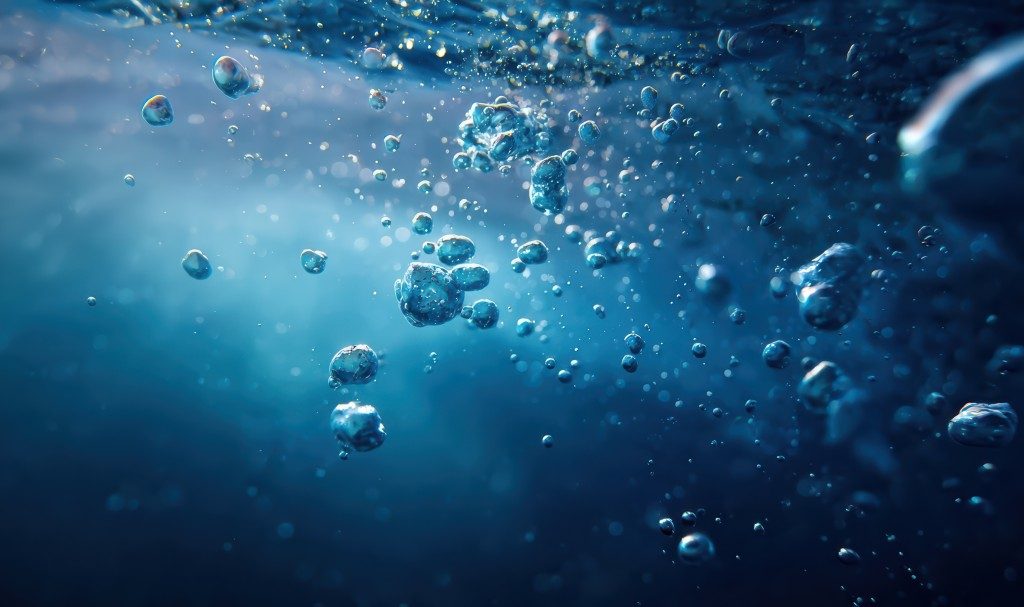
In this structure, minerals form away from the electrode surface rather than directly on it, while hydrogen bubbles naturally generated during the reaction act like a brush, continuously cleaning the electrode surface and preventing mineral buildup.
In experiments, the team successfully operated the device continuously and stably for more than 120 hours using lava seawater from Jeju. The system removed 80–90 percent of dissolved inorganic carbon from seawater and reduced electricity consumption by up to 54 percent compared with existing technologies.
This e-DOC technology also converts carbon dioxide dissolved in seawater into calcium carbonate (CaCO₃), a stable mineral form that enables virtually permanent carbon storage. In addition, the process simultaneously produces high-purity hydrogen (H₂) and magnesium hydroxide (Mg(OH)₂), a material used in eco-friendly products and industrial applications, further improving its economic potential.
By locking the carbon into this mineral form, the technology prevents it from returning to the atmosphere, allowing the ocean to continue absorbing more carbon dioxide.
“This technology converts carbon dioxide dissolved in seawater into a mineral form that does not return to the atmosphere, enabling permanent storage and helping the ocean continuously absorb new carbon dioxide,” said Dong-Yeun Koh, associate professor, Department of Chemical and Biomolecular Engineering, Korea Advanced Institute of Science and Technology (KAIST).
“We expect this work to accelerate the commercialization of marine carbon removal technologies and contribute to the realization of a carbon-neutral society,” he added.
The newly developed device can be produced in a compact, modular form, making it suitable for installation on ships, offshore plants, and other marine industrial facilities.
The research team expects the technology to be scaled up into large-scale marine carbon-removal systems that can help achieve carbon neutrality and address climate change
—
Source: Korea Advanced Institute of Science and Technology; Image: muhammad.abdullah/Magnific
The study can be found at: A Compact Hollow Fiber Electrode Assembly Architecture for Continuous Electrochemical Marine Carbon Dioxide Removal
Disclaimer: This article does not necessarily reflect the views of AsianScientist or its staff.