AsianScientist (Jul. 24, 2026) – Food spoilage remains a major global challenge that exacerbates food insecurity and environmental pollution, with 40-50% of harvested fruits and vegetables lost before they reach our tables. Packaging plays an important role in protecting our produce, but the heavy use of plastic worsens pollution. To mitigate this, researchers at Kyushu University are looking for biodegradable alternatives for food packaging.
“Our lab has long focused on extending the shelf life of agricultural produce while reducing reliance on petroleum-based plastics,” said Fumihiko Tanaka, Professor at Kyushu University’s Faculty of Agriculture.
Tanaka and her team used pumpkin peel to create a material that can enhance existing biodegradable packaging – carbon quantum dots (CQDs), a fine black powder made of small carbon nanoparticles
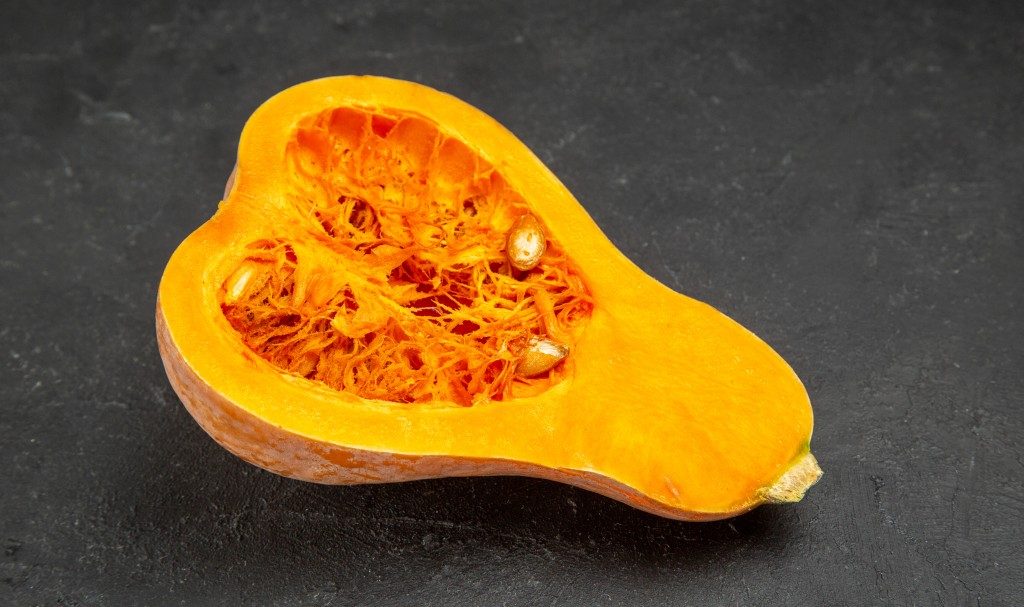
Previous studies have shown that CQDs can be produced from food-processing waste such as lemon and banana peels. The Kyushu University researchers chose to focus on pumpkin peel, as it makes up around 10% of the fruit’s mass and is rich in antioxidant compounds.
A biodegradable material often explored for packaging is CMC/Gel, a mixture of gelatin and carboxymethyl cellulose (CMC) that forms a non-toxic biopolymer film. Adding CQDs improves its antimicrobial and UV-blocking properties, which help slow oxidation and decay in food.
Incorporating CQDs in the CMC/Gel material also improved its tensile strength by 147% and reduced water vapour permeability. These properties are favoured as they can help keep packaging intact during transport and prevent spoilage from moisture loss.
“Actually, this project began with the idea from a student of ours from Southeast Asia,” shared Fumihiko Tanaka. “Cold-chain logistics across much of Asia are still underdeveloped, so we hope our technology, which preserves food at ambient temperature, could help in places where that infrastructure is lacking.”
To evaluate its efficacy, cherry tomatoes were stored using the new material for 25 days and compared against plastic-wrapped and unpackaged controls. The new material reduced weight loss and softening, and the tomatoes exhibited lower levels of microbial growth than the controls.
Addressing safety concerns, first author M.A. Reshaka Kavindi, from Kyushu University’s Graduate School of Bioresource and Bioenvironmental Sciences said: “Cell viability tests confirmed the material is non-toxic below 2 mg/mL, and the coating itself uses only a fraction of that amount, at roughly 0.01 millimeters thick. Consumers can further reduce exposure simply by washing or peeling.”
In the future, the researchers hope to further optimise their biodegradable CQD packaging to ensure it can meet established safety and regulatory limits. They also plan to explore the inclusion of natural antifungal agents in their material to protect produce against mold.
“Conventional antimicrobial packaging typically relies on metal nanoparticles like zinc oxide or silver, which carry a larger environmental footprint than CQDs. Ours are derived from organic matter and show good biocompatibility at effective concentrations, something critical for any food contact material,” said Associate Professor Fumina Tanaka.
“Beyond the environmental benefits, I’d also love for this material to bring a bit of fun to food packaging. Under UV light, the carbon dots fluoresce, and the color shifts with particle size. If we could eventually find a way to render text or illustrations with it, that would be pretty exciting too.”
—
Source: Kyushu University; Image: magnific/KamranAydinov
This article can be found at: Development of active food packaging using carboxymethyl cellulose/gelatin composites reinforced with carbon quantum dots derived from pumpkin peel waste
Disclaimer: This article does not necessarily reflect the views of AsianScientist or its staff.