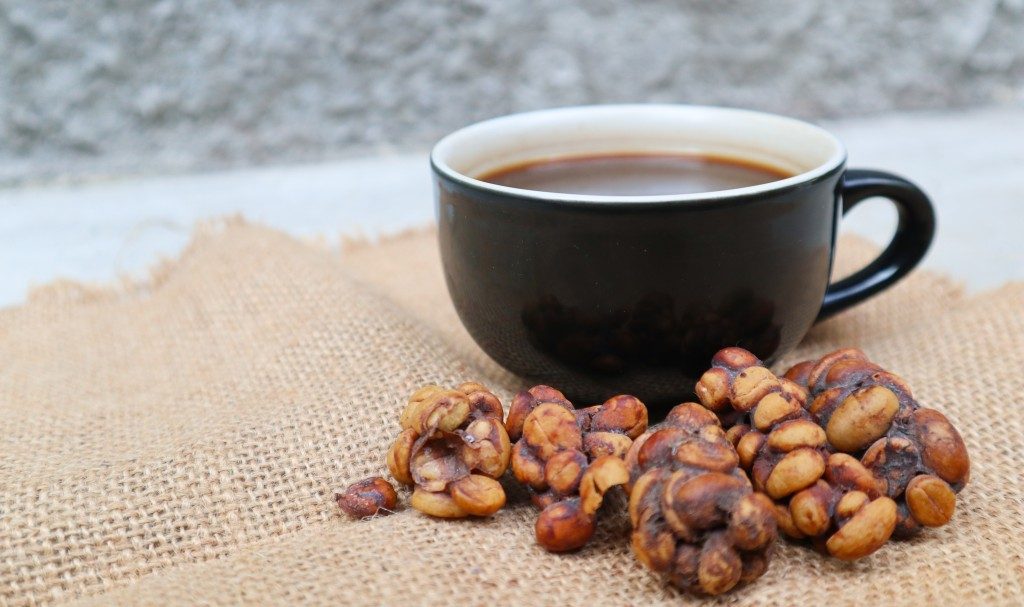
AsianScientist (Jan. 18, 2026) – Civet coffee, better known as kopi luwak, is a premium and highly-priced coffees globally, known for its unique aroma, taste, and nutritional value.
The beans, which can sell for as much as USD 1,000 per kilogram, are harvested from the faecal matter of civets — usually Asian palm civets (Paradoxurus hermaphroditus) — which eat ripe coffee berries and digest the pulp whilst the beans inside pass through the digestive system.
Although this type of coffee has been harvested and sold for over 100 years, there is still debate around whether the unusual harvesting method changes the coffee’s chemical composition.
A new study published in Scientific Reports might have answers to this. Researchers from Kerala, India, have found that coffee beans harvested from the faeces of the Asian palm civet may have higher levels of fats and other key flavour-enhancing compounds than traditionally harvested beans.
“Civets feed on ripened coffee berries, which undergo digestion, absorption, and a natural fermentation process during their passage through the gut. While the pulp gets digested, the beans are excreted through their faces,” the researchers stated in the study.
The study investigated the physical and chemical characteristics of civet-derived and manually collected Robusta coffee from conventionally managed and organically managed coffee estates across Kodagu, which ranks among the highest coffee-producing districts in India.
The team of researchers from the Central University of Kerala, India, collected 68 faecal matter samples from wild civets on five estates growing Robusta coffee in January. The researchers also collected ripe coffee berries from each estate for comparison.
“In our study area, located within the biodiversity hotspot of the Western Ghats, civets are part of the natural ecosystem and consume fruits wildly,” the researchers stated. “The civets in the area belong to three different species. However, based on our observations and previous research, the Asian Palm Civet, a nocturnal mammal, is found most frequently.”
The team, led by Professor Palatty Allesh Sinu from the Department of Zoology, found that the civet beans had a significantly higher total fat content than the manually harvested beans. The civet beans also had significantly higher levels of two fatty acid methyl esters (FAMEs) — caprylic acid methyl ester, and capric acid methyl ester.
“The chemical differences in the civet coffee are a result of fermentation of the beans in the digestive system of the civets, and that the differences likely affect the coffee’s final flavour,” the researchers stated.
The higher fat content would affect the coffee’s aroma and taste profile, whilst the higher levels in the two FAMEs may add a dairy-like flavour.
The team analysed unroasted beans for the study, as the roasting process would further affect the beans’ chemical composition. They also noted that they analysed Robusta beans, whilst most civet coffee is produced using Arabica beans.
—
Source: Central University of Kerala ; Image: Faiz Dila/shutterstock
Study link: Civet Robusta and natural Robusta coffee are different on key fatty acid methyl esters and total fat
Disclaimer: This article does not necessarily reflect the views of AsianScientist or its staff.