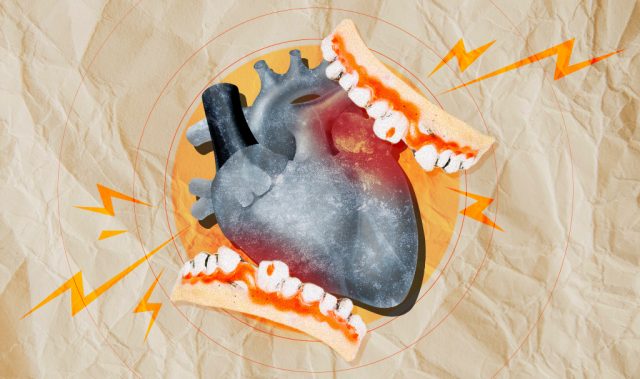
AsianScientist (Jun. 20, 2025) – For oral bacteria, the way to your heart is through your gums. It has long been observed that people with the gum disease periodontitis are more prone to heart problems. A recent study found that periodontitis patients have a 30 percent higher risk of developing atrial fibrillation (AFib), an irregular heart rhythm that can lead to complications like stroke and heart failure.
Scientists originally thought this association was due to the immune response to gum infections, triggering more inflammation throughout the body, damaging other organs.
However, DNA from harmful oral bacteria has been found in the heart muscle and valves, warranting a closer look at the pathway linking periodontitis to AFib.
“The causal relationship between periodontitis and atrial fibrillation is still unknown, but the spread of periodontal bacteria through the bloodstream may connect these conditions,” said first author Shunsuke Miyauchi, assistant professor at Hiroshima University’s Graduate School of Biomedical and Health Sciences.
Porphyromonas gingivalis is of particular interest among oral bacteria. It has already been associated with diseases seemingly unrelated to oral health, like Alzheimer’s and diabetes, and has been found in the brain, liver, and placenta.
Researchers from Hiroshima University studied the spread of P. gingivalis in mice, infecting their tooth pulp with an aggressive strain of the bacteria. By the 18th week, infected mice had a 30 percent rate of AFib compared to just 5 percent in uninfected mice. They also had jaw lesions and tooth decay, characteristic of a P. gingivalis infection.
Upon closer investigation, the researchers found P. gingivalis in the left atrium of the hearts of infected mice, along with fibrosis – scars formed by hardened and overgrown tissue. The buildup of scar tissue in the heart can disrupt signals, increasing the risk of AFib.
To corroborate their findings in humans, the scientists analysed tissue from the left atrium of 68 AFib patients undergoing heart surgery. They found P. gingivalis, in amounts that correlated to the severity of gum disease in the patient, suggesting that the lesions caused by periodontitis allow the bacteria to enter the bloodstream.
“P. gingivalis invades the circulatory system via the periodontal lesions and further translocates to the left atrium, where its bacterial load correlates with the clinical severity of periodontitis,” explained Miyauchi. “Once in the atrium, it exacerbates atrial fibrosis, which results in higher AFib inducibility.”
These results suggest that maintaining good oral hygeine can also protect heart health. “Periodontal treatment, which can block the gateway of P. gingivalis translocation, may play an important role in AFib prevention and treatment,” said Miyauchi. By preventing periodontitis lesions forming in the mouth, P. gingivalis is also prevented from entering the bloodstream and reaching the heart.
Next, the team is planning to research P. gingivalis and its effects on heart muscle cells. Learning more about the bacterium’s mechanisms and byproducts could lead to new treatment strategies for AFib in the future.
“We’re also now focusing on establishing a collaborative medical and dental system in Hiroshima Prefecture to treat cardiovascular diseases, including atrial fibrillation. We aim to expand this initiative nationwide in the future,” said Miyauchi.
—
Source: Hiroshima University: Image/ Shutterstock
This article can be found at Atrial Translocation of Porphyromonas gingivalis Exacerbates Atrial Fibrosis and Atrial Fibrillation
Disclaimer: This article does not necessarily reflect the views of AsianScientist or its staff.