Getting to the (alternative) meat of the matter
Aside from tracking fat and carbohydrate levels in Asian diets, research into alternative proteins is buzzing with activity, given the region’s vulnerability to the consequences of climate change. Animal agriculture reportedly leaves behind a greater carbon footprint than all transportation combined, springing Asia and the world at large on the hunt for more environmentally friendly protein source.
Following the region’s vegetarian traditions, plant-based proteins are quickly emerging as the favored alternative. By potentially using up to 99 percent less land than raising livestock, producing plant-based equivalents could have an overall lower environmental impact.
Historically, soy and tempeh-based products eaten by vegetarians in India and China were viewed as ‘poor man’s meat’. Today, however, alt-protein products are considered trendy luxuries—with their high price points making them largely inaccessible to billions of Asia’s denizens and hindering uptake. Half a kilo of ground plant-based beef from American plant-based meat producer Beyond Meat, for example, retails at around US$18, while the same amount of real mincemeat could cost as low as US$5.
Affordability aside, another factor influencing the market appetite for alt- proteins is taste, with Asian consumers often seeking the flavors of home.
“Consumers in the region are looking for comfort foods,” explained Mr. Dirk Oyen, vice president and general manager, Southeast Asia, Human Nutrition at multinational food ingredient supplier ADM. “Beyond traditional plant-based burger patties, convenient products in local offerings are set to drive food preferences in Southeast Asia.”
In early 2021, ADM opened an innovation lab at Singapore’s Biopolis research hub to explore critical elements of plant-based products like function, texture and flavor. They joined numerous alt-protein companies setting up shop in the city-state, with diverse products that also include cell- based substitutes—so-called for being grown from animal cells in a laboratory.
Whereas plant-based proteins strive to replicate the texture and taste of actual meat, cell-based proteins are meant to be practically indistinguishable from the real thing. By eliminating the need for livestock, advocates for cell-based meat say that it uses up to 95 percent less land and 78 percent less water compared to conventional beef production, making it another environmentally friendly option.
But environmental researchers counter that cell-based meat still has a carbon footprint roughly 10 times that of their plant-based counterparts, challenging suppliers to make the production process more efficient. Despite these teething pains, cell-based protein is already gaining headway, with Singapore becoming the first country in December 2020 to approve the sale of cultured chicken from the US startup Eat Just.
Across the continent, alt-protein startups are booming, with the sector’s product offerings expanding by 186 percent between 2015 and 2019, noted Oyen.
“People are exploring more options, spurring the acceleration of investments and innovations pouring into the Asian market,” he added.
The future of food in Asia
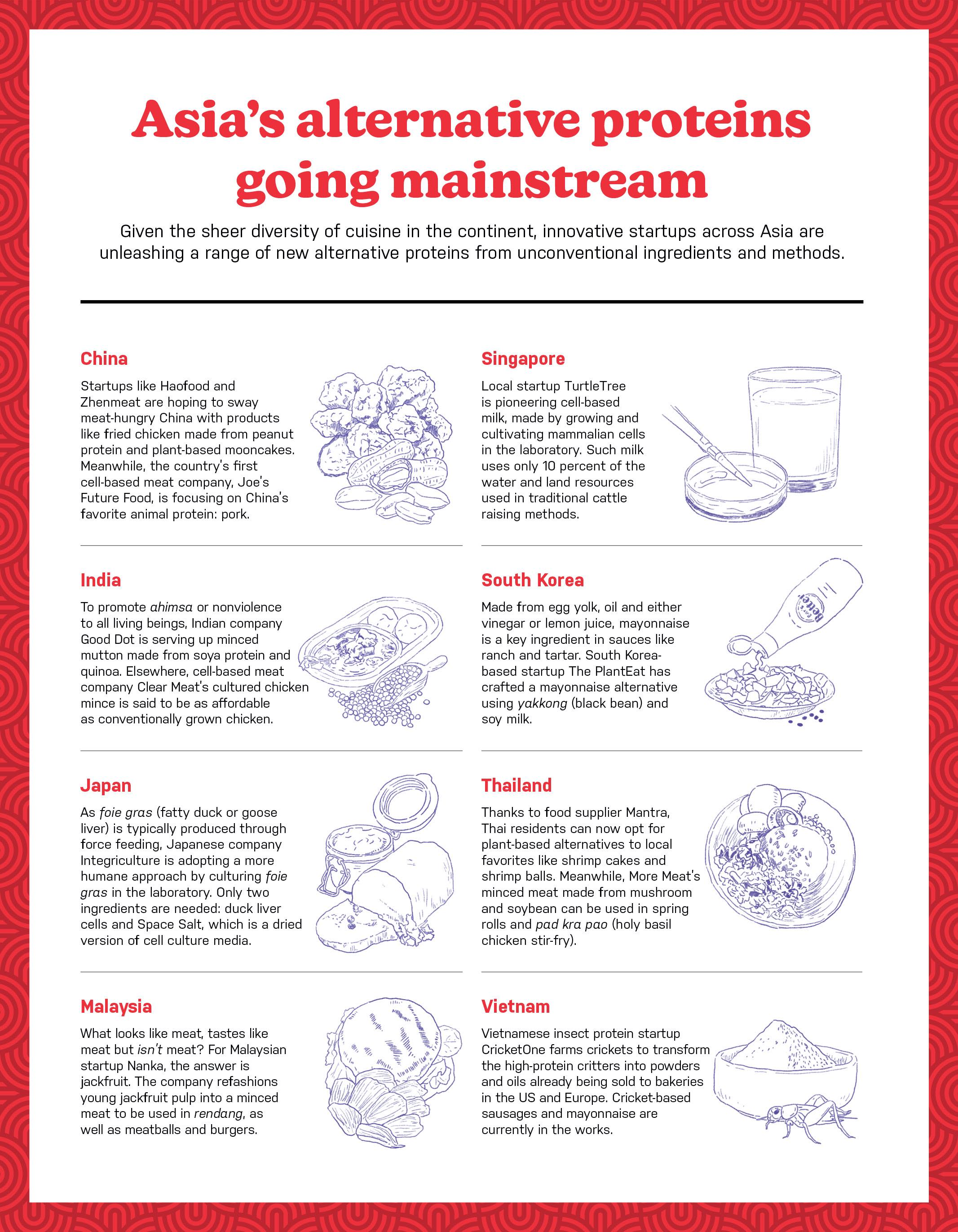
At least 35 Asian startups are offering products that span the alt-protein spectrum: Hong Kong-based Avant Meats dishes out cell-based seafood; Malaysia’s Ento delivers barbecue roasted crickets and larvae; Sophie’s Bionutrients in Singapore transforms seaweed into vegan patties and cheese; South Korea-based Zikooin makes a plant-based beef called UNLIMEAT from upcycled grains deemed too ‘ugly’ to sell; and India’s EVO Foods whips up a plant-based egg alternative.
However, Asia’s diverse cultural and religious landscape can pose unique challenges for these rising alt-protein startups. In India, for example, beef is banned in several Hindu-majority states and pork has historically been associated with dirt and disease, making animal products overall a touchy topic in the country. Surprisingly, eggs have largely avoided controversy, with many practicing vegetarians in India still consuming the protein, noted EVO Foods co-founder Ms. Shraddha Bhansali.
“There’s obviously something about eggs that people don’t find offensive; instead they see it as a great source of protein,” she explained.
Echoing Oyen’s insights earlier, to successfully penetrate India’s unpredictable market, Bhansali and her co-founder Mr. Kartik Dixit were careful to retain as much familiarity while developing their plant-based egg substitute, starting with the ingredients.
EVO Foods’ product is made from a blend of three legumes—mung beans, chickpeas and peas—all of which grow in abundance and are national staples, a fact they emphasize to their vegetarian customers. According to Bhansali, the company uses a proprietary homogenization and pasteurization process to ensure the proteins extracted from the legumes retain their nutritious properties and the product has an egg-like consistency.
As with any alt-protein, price is another factor affecting EVO Food’s success in India. By using local materials and processing, the company has kept production costs and the carbon footprint of their product to a minimum, having even reached price parity with organic eggs in India to encourage uptake.
These early successes will go a long way in swaying one of the world’s largest agro-economies toward much greener alternatives—laying the groundwork for neighboring countries to follow.
While alt-proteins are quickly gaining steam in Asia and around the world for their purported sustainability compared to their traditional meat-based counterparts, there remains a dearth of studies that examine the environmental impact of the region’s available plant-based and cell-based products.
Moreover, with the highly processed nature of alt-proteins, their nutritional value requires a closer look. Answering the call, Henry and collaborators at the Chinese agritech company Pinduoduo are planning to embark on the first-of-its-kind head-to-head comparison of plant-based-meat and animal- meat diets.
Indeed, more comprehensive research is needed on the nutritional value of Asian diets, given the region’s diversity—in terms of both cuisine and population. Such studies would contribute toward stratifying local communities based on their susceptibility to common health concerns like high blood pressure and blood sugar. In turn, physicians and nutritionists can potentially give patients more tailored and culturally relevant dietary advice.
With more data, leaders in research and industry will be better equipped to help Asia usher in a new culinary culture that is vibrant, nutritious, sustainable—and of course, delicious—all at once. Moving forward, Asia’s ever-evolving cuisines will continue to be food for thought.
This article was first published in the January 2022 print version of Asian Scientist Magazine.
Click here to subscribe to Asian Scientist Magazine in print.
———
Copyright: Asian Scientist Magazine. Illustration: Lam Oi Keat/Asian Scientist Magazine. Photography: Daniel Kuan/Asian Scientist Magazine.
Disclaimer: This article does not necessarily reflect the views of AsianScientist or its staff.