The venture creation process
When scientists and researchers think of venture creation, there often is a common misconception that VCs only come in during the later stages of development, such as when the founder has already established proof-of-concept.
This is not the case, said Dr. Kenneth D. Noonan, CEO of Lightstone Singapore. Instead, venture creation is an iterative partnership that involves both researchers and investors throughout a well-defined and proven process.
“The process starts with the investors and scientific founders defining a viable hypothesis that will form the basis of the research and discovery efforts of a potential company,” Dr. Noonan explained.
Once the seed hypothesis is agreed, the VC team works closely with the founders (and often the tech transfer offices at the Institution) to establish research, operational, commercial and financing plans, in an iterative but collaborative process.
Once a company is established and a plan agreed, the VCs provide strategic guidance and interim management to the newly incorporated company thereby helping them to achieve the proof-of-concept required for the next round of financing. Lightstone Singapore has founded two such companies in Singapore, namely: Medisix Therapeutics and Ligature Therapeutics.

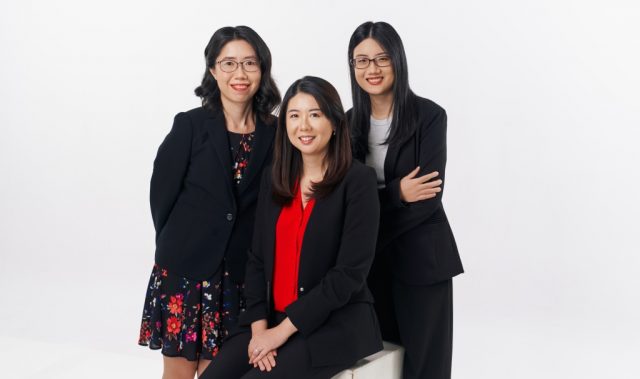
Photo credit: Lightstone Singapore.
Because the venture creation process is labour intensive on the part of the Founders, their institutions and the VC, it is crucial for scientific founders to choose VCs they can align with including an open communication of their goals while building a relationship of trust allowing all parties to reap the maximum benefit from the coaching provided by the VC.
“Collaboration and building a relationship is a two-way process,” highlighted Dr. Alvin Hung, co-founder at Ligature Therapeutics, one of Lightstone Singapore’s portfolio companies which is developing small molecule, ‘protein degrader’ drugs.
“The VC needs to be able to add value to the company beyond just cash, while the company’s management as well as the founders need to be receptive to feedback,” he added.
During Ligature’s earliest days, Lightstone Singapore was able to use its experience in venture creation to refine both Ligature’s research strategy as well as its business proposition. The partnership also allowed Ligature to gain access to a worldwide network of mentors, business consultants and scientific leaders.
Dr. Hung noted, “This network effect has, in turn, provided the foundation for Ligature to become competitive in the global biotech arena.”