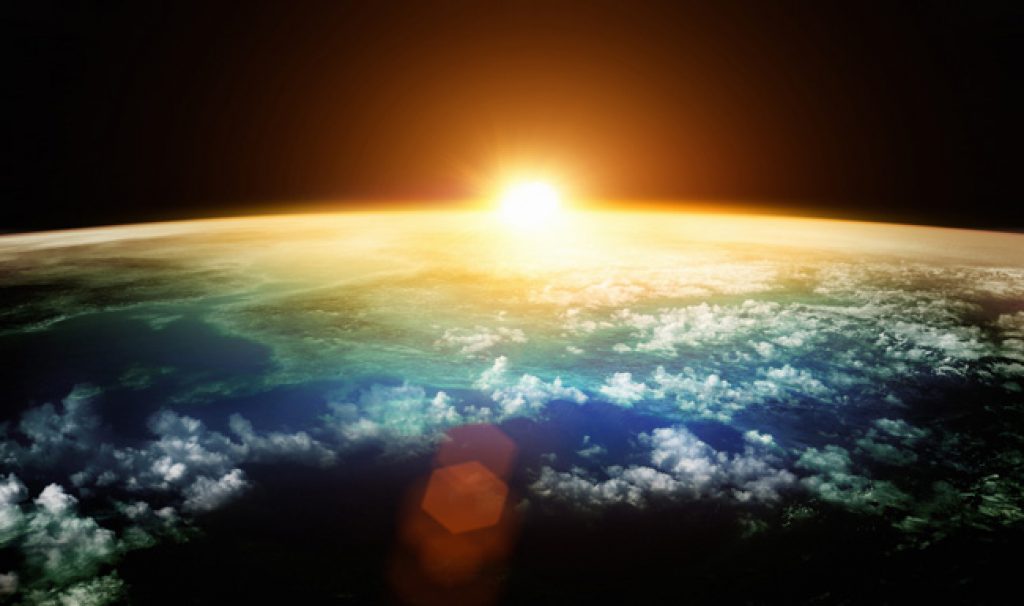
AsianScientist (Jan. 12, 2016) – Oxygen is crucial for the existence of animals on Earth and increase in oxygen is thought to have led to the rise of the first animals. Now, new research published in the Proceedings of National Academy of Sciences shows that 1.4 billion years ago, there was enough oxygen for animals—and yet, over 800 million years went by before the first animals appeared on Earth.
Animals evolved by about 600 million years ago, which was late in Earth’s history. The late evolution of animals, and the fact that oxygen is central for animal respiration, has led to the widely promoted idea that animal evolution corresponded with a late rise in atmospheric oxygen concentrations.
“But sufficient oxygen in itself does not seem to be enough for animals to rise. This is indicated by our studies,” say postdoc Emma Hammarlund and Professor Don Canfield, Nordic Center for Earth Evolution, University of Southern Denmark.
Together with colleagues from the China National Petroleum Corporation and the University of Copenhagen, Hammarlund and Canfield analyzed sediment samples from the Xiamaling Formation in China. Their analyses revealed that a deep ocean 1.4 billion years ago contained at least four percent of modern oxygen concentrations.
Usually it is very difficult to precisely determine oxygen concentrations of the past. The new study, however, combines several approaches to break new ground in understanding oxygen concentrations from 1.4 billion years ago.
The researchers used trace metal distributions to show that the bottom waters where the Xiamaling Formation sediments deposited contained oxygen. The distribution of biomarkers, or molecules derived from ancient organisms, demonstrated that waters of intermediate depth contain no oxygen. Therefore, the Xiamaling Formation deposited in an ancient oxygen-minimum zone, similar to but also different from those found off the present coasts of Chile and Peru.
With this backdrop, the researchers used a simple ocean model to estimate the minimum concentrations to atmospheric oxygen required to reproduce the distribution of water column oxygen in the Xiamaling Formation. According to Canfield, the water column had an oxygen concentration of at least four percent of present atmospheric levels (PAL), which should be sufficient for some animals to exist and evolve.
“Having determined the lowest concentration of oxygen in the air almost one and a half billion years ago is unique,” says Hammarlund. “Researchers know of simple animals, such as sponges and worms, that today are capable of managing with less than four percent PAL, even much less.”
“If [sponges] manage with less than four percent of today’s oxygen levels, it is likely that the first animals could do with these concentrations or less,” adds Canfield.
The results differ from other studies and raise several questions, such as: Why then did animals rise so late in Earth’s history?
“The sudden diversification of animals probably was a result of many factors. Maybe the oxygen rise had less to do with the animal revolution than we previously assumed,” notes Hammarlund.
The article can be found at: Shuichang et al. (2015) Sufficient Oxygen for Animal Respiration 1,400 million Years Ago.
———
Source: University of Southern Denmark; Photo: Shutterstock.
Disclaimer: This article does not necessarily reflect the views of AsianScientist or its staff.