AsianScientist (Sep. 26, 2014) – A study in mice has shown that pentraxin 3 can restrict immune-related damage to host tissue by causing the aggregation of proteins known as histones. These findings published in the journal Science Signaling could lead to new treatment approaches for sepsis.
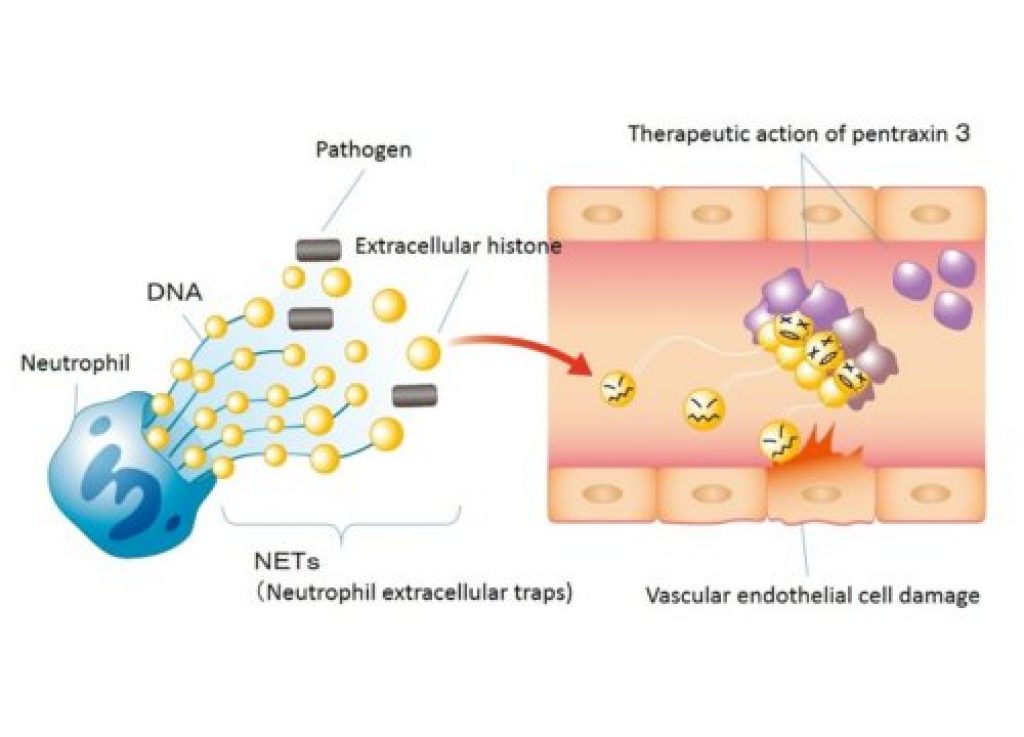
Sepsis is a state of inflammation throughout the whole body that in some cases can lead to multiple organ failure and death. In severe sepsis, histones released from damaged cells accumulate in the blood as extracellular histones, where they cause damage to endothelial cells, resulting in organ failure.
In the present study, the research group of Professor Takao Hamakubo and Project Assistant Professor Daigo Kenji at the University of Tokyo’s Research Center for Advanced Science and Technology (RCAST), in collaboration with the research group of Professor Kouhei Tsumoto at the Graduate School of Engineering, examined the action of the protein pentraxin 3 (PTX3) in the blood during the acute phase of inflammation.
The researchers discovered that PTX3 directly aggregates with histones, thereby suppressing the harmful effects of extracellular histones towards cells that line blood and vessels. This is in contrast with the assumption that PTX3 would act by causing downstream signaling, similar to how other soluble pentraxins function. By administering PTX3, the research team was able to improve the survival of both cultured human cells as well as mice subjected to sepsis.
In addition to the discovery of this new role of PTX3 in innate immunity, this research is expected to lead to a potential new therapy for organ failure brought about by extracellular histones released as a result of severe sepsis or other causes.
The article can be found at: Daigo et al. (2014) Protective Effect of the Long Pentraxin PTX3 Against Histone-mediated Endothelial Cell Cytotoxicity in Sepsis.
——
Source: University of Tokyo.
Disclaimer: This article does not necessarily reflect the views of AsianScientist or its staff.