AsianScientist (Jul 29, 2014) – Researchers have uncovered the mechanism of action of γ-secretase modulators, facilitating the development of new drugs for Alzheimer’s disease. This research has been published in the Proceedings of the National Academy of Sciences.
Alzheimer’s disease (AD) is the most common dementing disorder and is one of biggest problems facing aging societies. It is thought to be caused by a deposition of amyloid-β peptide (Aβ) in the brain as senile plaques. In particular, the aggregation-prone species Aβ42 is thought to be the molecular culprit for AD.
γ-Secretase is an enzyme responsible for Aβ generation. Thus, γ-secretase modulators, which specifically inhibit Aβ42 generation, have been developed as therapeutics against AD without side-effects. However, molecular mechanism whereby γ-secretase modulators regulate enzymatic activity remained unknown.
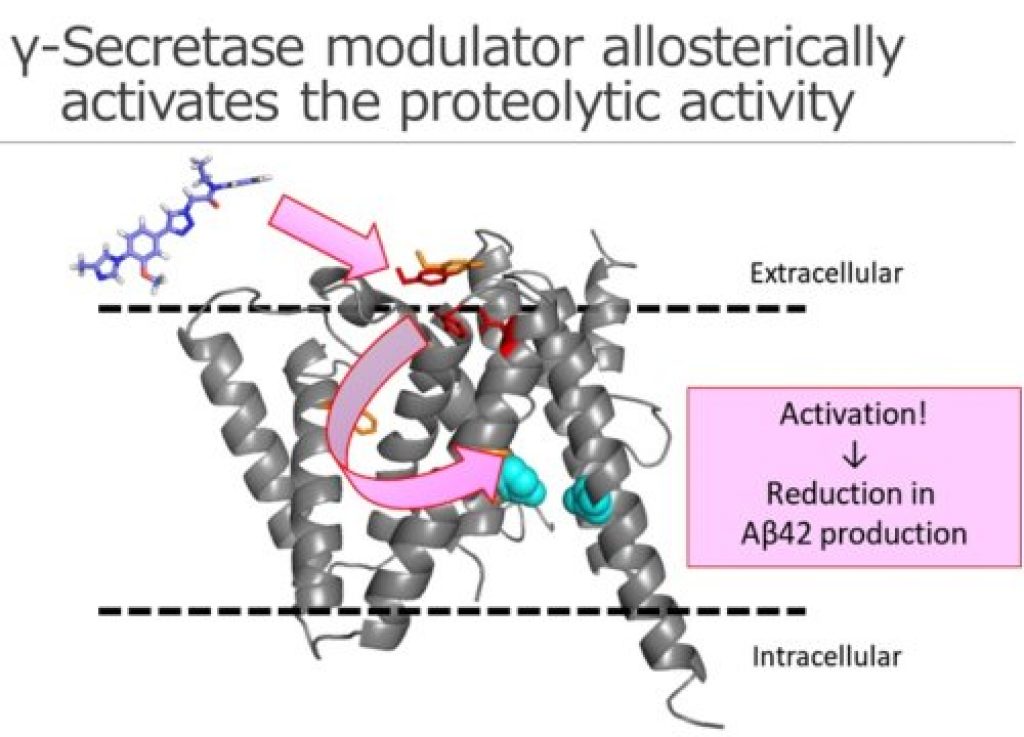
Researchers lead by Professor Taisuke Tomita, Ph.D., and graduate student Koji Takeo, Ph.D., at the Graduate School of Pharmaceutical Sciences, the University of Tokyo, identified that phenylimidazole-type γ-secretase modulators activate the proteolytic activity of γ-secretase. Moreover, they found that the compound targets to the extracellular region of presenilin, an enzymatic subunit of γ-secretase, to induce conformational changes at the catalytic site.
This is the first report to identify the molecular mechanism and binding site of the phenylimidazole-type γ-secretase modulator. These findings would lead to the rational design of γ-secretase modulators with better potency based on the structure and function of the molecule, and its interaction with the target, and the discovery of effective therapeutics against AD.
The article can be found at: Takeo et al. (2014) Allosteric Regulation of γ-secretase Activity by a Phenylimidazole-type γ-secretase Modulator.
———
Source: University of Tokyo.
Disclaimer: This article does not necessarily reflect the views of AsianScientist or its staff.