AsianScientist (Jun. 25, 2013) – “It is time we own and patronize our own,” says Mr. Alex Lim, Secretariat of the Association of South-East Asian Nations (ASEAN), discussing the need to unite science & technology efforts among member countries.
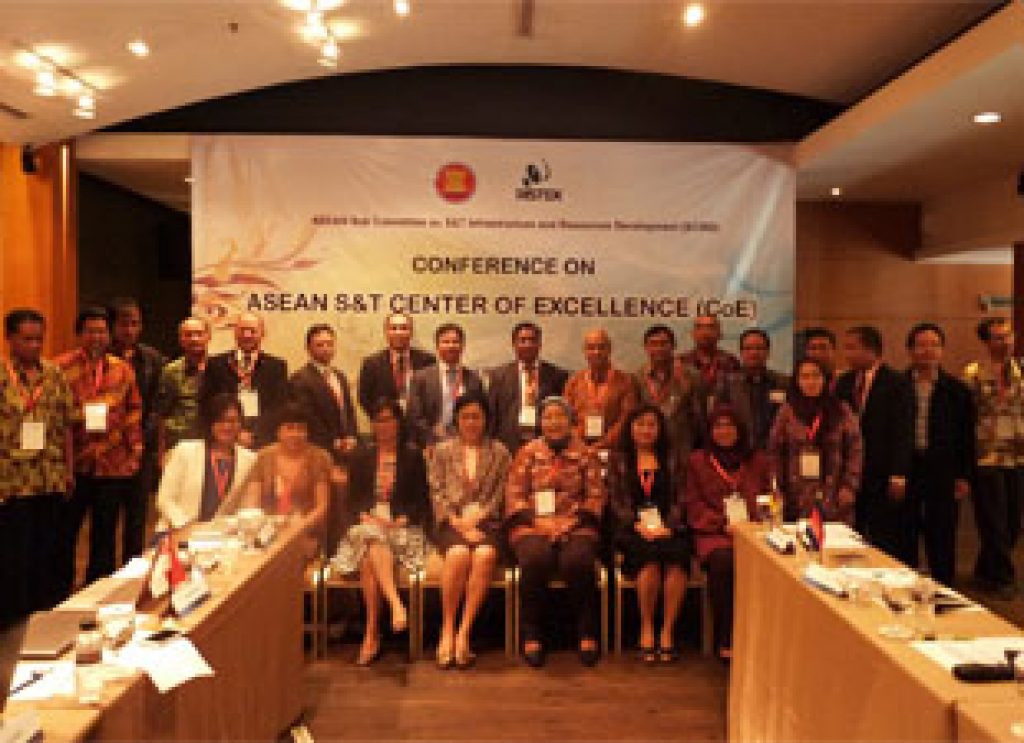
Mr. Lim was speaking at the ASEAN Sub-Committee of Science & Technology Research Infrastructure and Development conference held in Bandung, Indonesia from June 18-20, 2013. Delegates convened to discuss new initiatives across ASEAN and brainstorm new ideas.
“The co-operation on S&T in ASEAN has been going on for more than 35 years. Since 1970, what can we be very proud of? What can we show to the world that this is from ASEAN?” said Mr. Lim.
Founded in 1967, ASEAN is an organization of ten countries in Southeast Asia with the aim of accelerating economic growth and encouraging stability in the region. Science and technology is also key on ASEAN’s agenda. One such effort is to establish strong collaborative networks called scientific Centers of Excellence (CoEs).
An ASEAN Plan of Action was conceived in 1997 to develop these Centers, by focusing on six main areas: technology commercialization, human resource development, networking, increasing public awareness, strengthening infrastructure, and collaborating with non-ASEAN partners.
Despite an active and continual effort to promote R&D in ASEAN, Mr. Lim says that much more needs to be done in order to promote ownership and investment into ASEAN-made products.
“ASEAN has a different mentality; they prefer non-ASEAN products. For example, in health detection systems they prefer European, American, and German-developed products. It is time we own and patronize our own,” says Mr. Lim.
During the conference, delegates discussed the importance of focusing R&D efforts in the region. Key projects showcasing examples of ASEAN collaboration are the early disaster warning system led by Indonesia and biofuel technologies led by Malaysia.
But having Centers of Excellences may not be enough, as ASEAN comprises of ten countries with different scientific capabilities and directions.
“There has to be mutual recognition agreement among ASEAN countries without encroachment on sensitivities of member states. ASEAN is a group of ten proud countries that need to maintain national pride. We have to be very careful not to embarrass any of these ten countries,” says Mr. Lim.
Some ways to align and the Centers of Excellences were discussed at the conference, such as benchmarking against other similar centers around the world. Adopting a private-public partnership model, such as Singapore Aerospace consortium, could allow for member countries to work with industry partners.
“We don’t have to reinvent the wheel. Each country has their strengths. We can do it the ASEAN way, one step at a time, make do with existing mechanisms and find new ways to strengthen the Centers of Excellence,” says Mr. Lim.
——
Copyright: Asian Scientist Magazine.
Disclaimer: This article does not necessarily reflect the views of AsianScientist or its staff.