


materials science

Holey Graphene Boosts Hydrogen Production
Graphene riddled with holes can protect metal electrodes from acid degradation, thereby increasing the efficiency of hydrogen production during electrolysis.

Making Solar Cells Both Stable And Affordable
By incorporating manganese into an all-inorganic perovskite solar cell, scientists have increased its efficiency and stability while keeping manufacturing costs low.

Mirror-Image Nanoparticles Patterned On Peptides
Researchers have shown that chirality, which is typically observed in organic molecules, can be extended to three-dimensional metallic nanostructures.

Copper Sulfide Anodes Boost Performance Of Sodium Ion Batteries
A research team from South Korea has incorporated copper sulfide anodes into sodium ion batteries to increase battery capacity and cycling stability.

Porous Organic Salts To Stabilize Fuel Cells
Scientists in China have developed a new class of porous organic salts with high proton conductivity to power fuel cells.

Cactus Roots Inspire Water Absorbing Material
Inspired by the structure of cactus roots, researchers have developed a material that can absorb water 930 times faster than it loses water by evaporation.

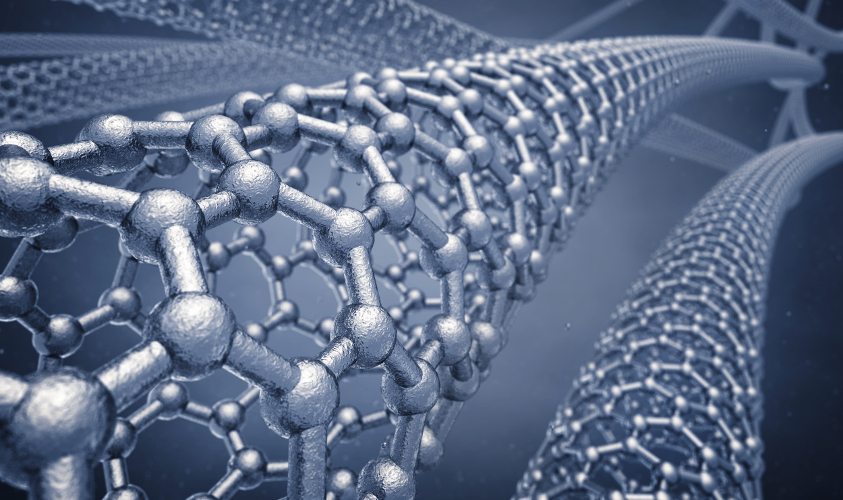
Carbon Nanotubes Strengthen Desalination Membranes
Adding carbon nanotubes to reverse osmosis membranes helps them withstand chlorine exposure without reducing their desalination abilities.

Diamond Circuits Can Take The Heat
Researchers in Japan have developed a hydrogenated diamond circuit that remains operational at 300 degrees Celsius.
Producing Graphene With 50 Times Less Solvent
A Singapore-based research team has developed a cost-effective technique for the mass production of high-quality graphene.


