


The Asian Scientist 100
Yi Yang

Institution
University of Hong Kong
Country
Hong Kong
Field
Physics
Yang received the 2024 Croucher Tak Wah Mak Innovation Award for his research aiming to realise strong free-electron-light interaction by interfacing slow nonrelativistic electrons with judiciously designed photonic environments.
(Photo: University of Hong Kong)
AWARDS
- 2024 Croucher Tak Wah Mak Innovation Award
Related articles

Insect-Inspired Robots Hop On Water
By studying how water striders do it, researchers have designed a robot that uses surface tension to walk on water.
Powerful Lasers Shed Light On Vision
Using the most powerful laser in the world, scientists have solved the structure of the GPCR rhodopsin to unprecedented detail.
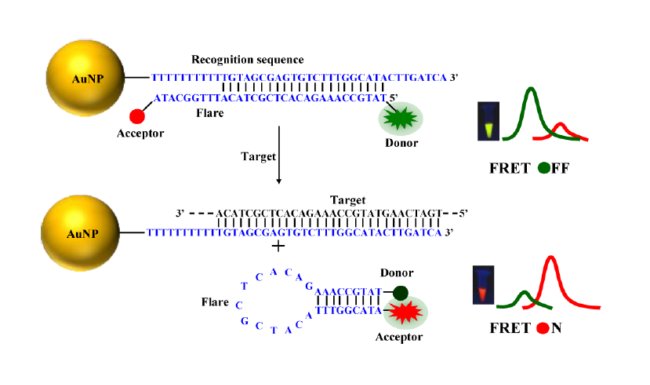
FRET Nanoflares Ferret Out False Positives
Scientists from Hunan University have improved intracellular mRNA sensors, making them less prone to false positives.

Malaria Drugs Could Potentially Treat Parkinson’s
Old malaria drugs could prove to be useful in treating Parkinson's, scientists say.

GYSS 2014: Taking A Leaf From Nature’s Book
Prof. Grätzel discusses how harnessing solar power has the potential to provide more than 6,000 times our current energy consumption.

Taking Nano Big: A Conversation With Subbu Venkatraman
We speak to Professor Subbu Venkatraman, founding director of the NTU-Northwestern Nanomedicine Institute, on how he is leading an international effort to ramp up nanomedical research in Singapore.

A Charged Partnership: Unlikely Partners In The Antibiotics Arms Race
Antibiotic resistance is a growing threat to global health. By combining their expertise, a cancer drug delivery researcher and a technology giant might just have come up with a solution to prevent the slide into a post-antibiotic era.
Building A Better Battery: Storage Solutions For Asia’s Energy Goals
Asia has set ambitious renewable energy targets for itself but is still missing one crucial piece of the puzzle—ways to store power from intermittent renewable sources. Could homegrown technologies fill the gap?

Test Scores And Dumplings
Yes, kids from dumpling-eating countries seem to do extraordinarily well on math and science tests, but at what cost?