


The Asian Scientist 100
Tan Eng King

Institution
National Neuroscience Institute
Country
Singapore
Field
Life Sciences
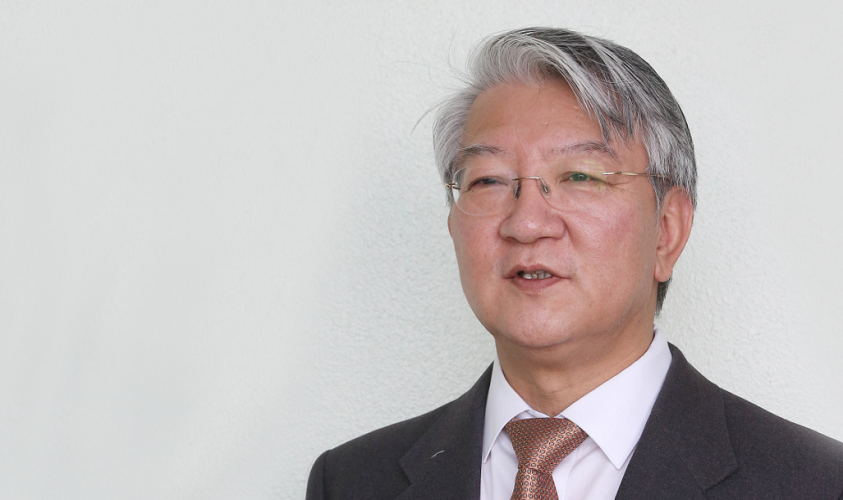
Tan Eng King received the 2018 President’s Science Award for identifying clinical biomarkers, developing novel models and transforming patient care in Parkinson’s Disease. (Photo: National Neuroscience Institute)
Related articles

i-Tiles For Teaching Special Needs Students
Scientists in Singapore have developed an interactive education system to help students with special needs learn better.

Sydney Brenner, ‘father of the worm’ and decoder of DNA, dies at 92
Known for his sharp wit, visionary thinking and versatility, Brenner made many seminal contributions to molecular biology over the course of a seven-decade career.

7 Must-Read Stories In March 2019
Stories about outstanding scientists topped the charts in the month of March, but readers were also curious about feats of engineering and studies about diseases.
Asia’s Scientific Trailblazers: Lee Sang Yup
By tweaking the metabolic pathways of living organisms, Professor Lee Sang Yup is maximizing the synergy between biology and chemistry for the benefit of industry and society.

Supercomputing Shouldn’t Be Rocket Science
Given the rapid pace of data generation, supercomputers are fast becoming an indispensable tool for research—now the challenge is to help scientists use them.

So You Want To Be A Clinician-Entrepreneur?
It may be the road less travelled, but becoming a clinician-entrepreneur is a rewarding career that more doctors should consider, says Professor Lawrence Ho.

This Program Gives Students A Real-Life Glimpse Into Deep Tech
SGInnovate’s Summation Programme alumnus Gabriel Wong shares how the apprenticeship has helped him better understand the field of deep tech.

A Tango With Quantum Entanglement
Scientists have created a 'universal entangler' which not only could advance our understanding of the quantum realm, but also pave the way for the construction of quantum computers.

Solving The Structure Of The Antibody-HLA Protein Complex
A research group in Singapore has mapped out the structure of the antibody-human leukocyte antigen complex at 2.4 angstrom resolution.