


The Asian Scientist 100
Tan Eng King
Institution
National Neuroscience Institute
Country
Singapore
Field
Life Sciences
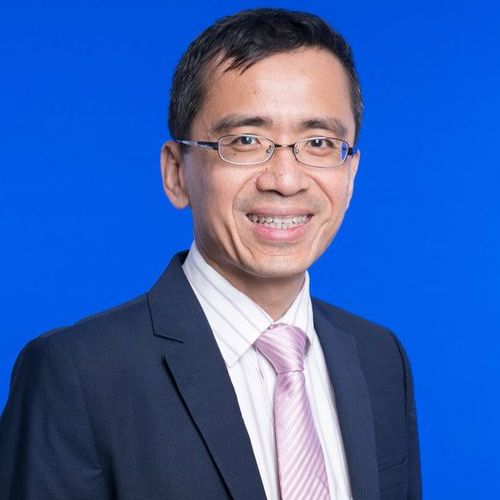
Tan Eng King received the 2018 President’s Science Award for identifying clinical biomarkers, developing novel models and transforming patient care in Parkinson’s Disease. (Photo: National Neuroscience Institute)
Related articles

Embracing The Contact Sport Of Innovation
To truly harness the power of personalized medicine, we had to bring our technology out of the lab and into the marketplace. Here’s how we did it with KYAN Therapeutics.

Setting Speed Limits On Financial Reporting & Clinical Trial Disclosures
Two studies on the financial and pharmaceutical industries highlight the protective role of regulations and the human cost when companies place self-interest over compliance.

The Future Of Science We Make (VIDEO)
Ten students from Asia will present their ingenious projects like making medical technologies affordable and using food waste as an energy source at the Google Science Fair in California, USA this year.

AI Sheds Light On Protein Structure
Chinese researchers are using artificial intelligence to predict protein structures and their resultant properties.

Uncovering The Origins Of Marijuana Use
Scientists have found psychoactive compounds preserved in 2,500-year-old funerary incense burners in eastern Pamirs, China.

Suppressing Parathyroid Gland Overactivity
A protein known as semaphorin3d was found to inhibit a signaling pathway that promotes parathyroid growth.

3D Printing A Better Artificial Cornea
A research team in South Korea has used 3D printing to fabricate a transparent cornea by mimicking human corneal structure.

Asia’s Top 10 Universities In 2013
Here's a list of ten prestigious Asian universities that scored a spot on the Times Higher Education Asia University Rankings 2013.

Blind A*STAR Researcher Sees Beauty In Mathematics
She lost her sight at four, but A*STAR researcher Dr. Yeo Sze Ling never gave in to her circumstances and eventually graduated with a PhD in mathematics.