


The Asian Scientist 100
Tan Eng King
Institution
National Neuroscience Institute
Country
Singapore
Field
Life Sciences
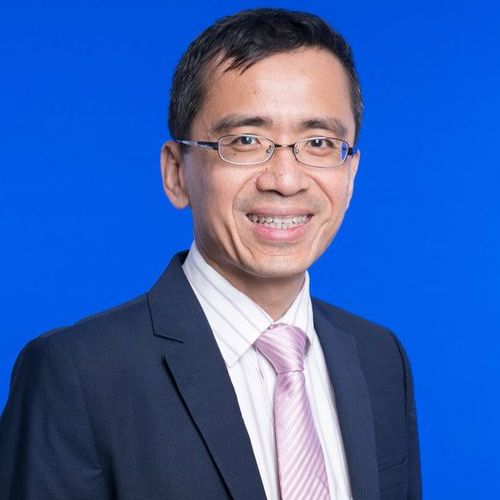
Tan Eng King received the 2018 President’s Science Award for identifying clinical biomarkers, developing novel models and transforming patient care in Parkinson’s Disease. (Photo: National Neuroscience Institute)
Related articles

Giving Cell-Based Seafood The Shiok Factor (VIDEO)
Instead of farming meat from animals, Dr. Ling Ka Yi and her team at Shiok Meats are harvesting animal-free crustacean meats from cells.
Building The Foundations Of 5G (VIDEO)
CEO of Singapore-MIT Alliance for Research and Technology, Eugene Fitzgerald, is leading a team to develop the next generation of computer chips.

Flattening The Complexity Of Quantum Circuits
By arranging qubits in a pseudo two-dimensional array, scientists have simplified the construction of quantum computers.
Fact Check: 5 Reasons Why The Coronavirus Is Not ‘Man-made’
Controversial claims over the coronavirus’ origin have proliferated on the internet. Here, we examine the scientific evidence that supports its natural origins.

Scientists Develop Cellulose-Based Plastic Substitute
This cellulose-based material that is four times stronger than steel and as heat-resistant as ceramics could one day displace plastics.

Asia’s Rising Scientists: Ho Ghim Wei
To meet the world’s rising energy demands, Associate Professor Ho Ghim Wei is leveraging solar technologies for a brighter and more sustainable future.

How Remdesivir Blocks SARS-CoV-2 Replication
Chinese scientists have uncovered the structural basis for SARS-CoV-2 inhibition by Remdesivir.

Enlarging Asia’s Food Basket With Gene Editing
Food security expert Professor Paul Teng talks to Asian Scientist Magazine about how gene editing technologies like CRISPR could help to address Asia’s growing demand for food.

WEF 2020 Young Scientists Include Eight From Asia
From neuroscience to satellite research, eight scientists based in Asia were honored as part of the World Economic Forum’s Class of 2020 Young Scientists.