


The Asian Scientist 100
Tan Eng King
Institution
National Neuroscience Institute
Country
Singapore
Field
Life Sciences
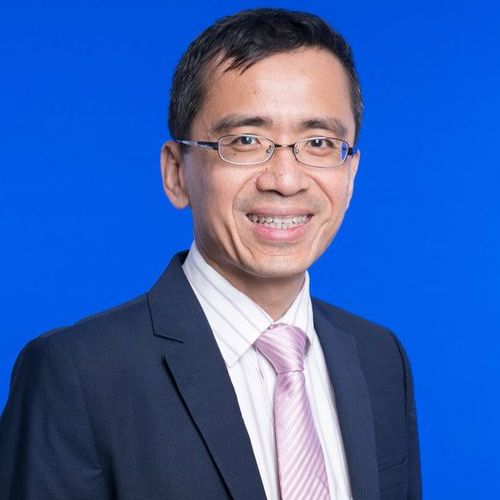
Tan Eng King received the 2018 President’s Science Award for identifying clinical biomarkers, developing novel models and transforming patient care in Parkinson’s Disease. (Photo: National Neuroscience Institute)
Related articles
The Blind Spot Can Sense Light After All
Although not involved in vision, light on the eye's blind spot can influence the pupillary light reflex.
Hydogels Help Hep C Drugs Go The Distance
Hydrogel delivery of PEGylated interferon could help reduce the frequency of treatment for hepatitis C patients to once every two months.

A Clarion Call To Women Scientists To Share Their Stories
Dr. Debalina Dutta of the National University of Singapore is undertaking an ambitious project to study the careers of 100 women scientists in Singapore.

Taking Nano Big: A Conversation With Subbu Venkatraman
We speak to Professor Subbu Venkatraman, founding director of the NTU-Northwestern Nanomedicine Institute, on how he is leading an international effort to ramp up nanomedical research in Singapore.

A Charged Partnership: Unlikely Partners In The Antibiotics Arms Race
Antibiotic resistance is a growing threat to global health. By combining their expertise, a cancer drug delivery researcher and a technology giant might just have come up with a solution to prevent the slide into a post-antibiotic era.

The Secrets of Traditional Asian Beauty
We take a look at ancient natural beauty remedies that Asian women have been using for centuries.

Taxing By The Pound
As Asia transitions from battling infectious microbes to battling the bulge, can a controversial 'fat tax' in Japan keep waistlines under control?

10 Asian Biotech Innovations To Watch In 2015
Check out these Asian biotech innovations that might soon be reaching a market near you!
It Takes Three To Clap: Helping Renewable Energy Soar In Asia
A high-level panel at the World Economic Forum on East Asia discussed a trifecta of changes in policy, technology and education that are needed to help renewable energy take flight in the region.