


The Asian Scientist 100
Ping Xu

Institution
National University of Defense Technology
Country
China
Field
Physics
Xu was a recipient of the 2024 Tan Kah Kee Science Award in technological sciences for her research on lithium niobate photonic quantum chips.
(Photo: Tan Kah Kee Science Award Foundation)
AWARDS
- 2024 Tan Kah Kee Science Award
Related articles

How Cone Snails Use Sex Pheromones To Lure Prey
By releasing molecules mimicking the pheromones of fire worms, cone snails have found a way to turn their prey's natural sex drive into a lethal weapon.

Nuts & Bolts—Take A Bite Out of Food Innovation
Fresh, filling and functional foods: Three TechOffers to shake up the food value chain.

Schemes To Help Your Business Grow In 2019
Singaporean companies can tap into a range of government schemes and incentives to help them ride out the uncertainty and thrive in 2019.

Elevating Your Business With External Expertise
From wastewater treatment to artificial intelligence, IPI’s Tech Experts offer insights that will strengthen businesses in pursuit of innovation. Download our white papers to find out more.

Catalyzing Innovation In Deep Tech (VIDEO)
As CEO of SGInnovate, Dr. Lim Jui supports budding scientist-entrepreneurs as they leverage deep tech to take on the biggest problems of Singapore—and the world.

Asian Scientist Magazine’s January 2021 Roundup
Starting the year with surprising uses for human waste in space and ancient worm fossils, here are five of Asian Scientist Magazine’s top pieces from January 2021.

AI Identifies A Three Punch Combo Against COVID-19
With the help of artificial intelligence platform IDentif.AI, scientists have found that a combination of remdesivir, ritonavir and lopinavir may effectively treat COVID-19.
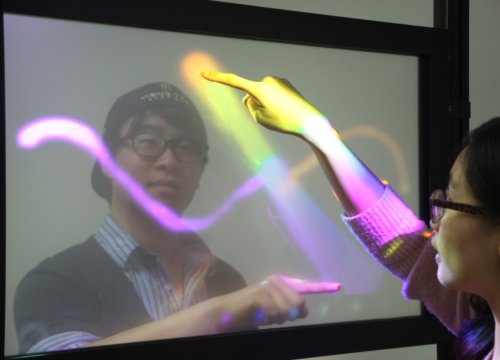
KAIST Develops Two-Sided Touchable Display, TransWall
The two-sided, transparent TransWall developed at KAIST provides users with interactive haptic feedback.

Building Trust In Artificial Intelligence
Artificial intelligence is at an inflection point, writes BasisAI CEO Liu Feng-Yuan, and its widespread adoption depends on whether society can place its trust in it.