


The Asian Scientist 100
Lu Ke

Institution
Chinese Academy of Sciences
Country
China
Field
Materials Sciences
Lu is the winner of the 2020 Future Science Prize (Physical Science Prize) for discovering and synthesizing a superior nanotwinned structure and gradient nanostructure.
(Photo: Future Science Prize)
AWARDS
- Future Science Prize 2020
Related articles

OPINION: India Gains Its Rightful Place In The Asian Century White Paper
The Australia in the Asian Century White Paper underlines the increasing importance of India for Australia, write two professors from the University of Adelaide,

The Asian Flush Syndrome: Red-Faced Over Governmental Inaction
Those who experience the Asian Flush syndrome are at a greater risk of developing esophageal cancer, writes David Tan, and governments across Asia need to educate people about this.

Australia To Invest In Asia Literacy, Asian Languages
Australian students must have a better understanding of the culture, history, and languages of her Asian neighbors, says a white paper released by the Gillard Administration.
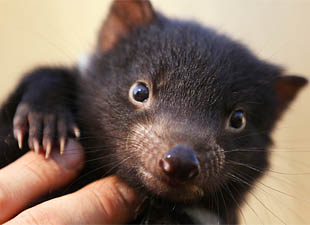
Save Australia’s ‘Frozen Zoo’
Australia’s “Frozen Zoo” – the only facility of its kind on the continent – is facing funding difficulties, writes Professor Ian Gunn, its co-founder.

Quintiles, Prodia To Collaborate On Diabetes Study In Indonesia
Quintiles today announced the start of its first global diabetes study involving Indonesia, through a partnership with Prodia Clinical Laboratory for in-country testing of samples.

Ironwood, AstraZeneca To Develop Linaclotide In China
AstraZeneca and Ironwood Pharmaceuticals, Inc. announced this week an agreement to co‐develop and co‐commercialize Ironwood’s linaclotide in China.

Twisted Light At The Single Photon Level
Researchers have demonstrated that light in tiny integrated arrays of emitters does not propagate in straight rays, contradicting traditional concepts in physics.

Clinical Trial To Test If Vitamin D Can Prevent Multiple Sclerosis
A new clinical trial set to take place in Australia and New Zealand will test whether vitamin D can prevent multiple sclerosis in those at risk of developing the disease.
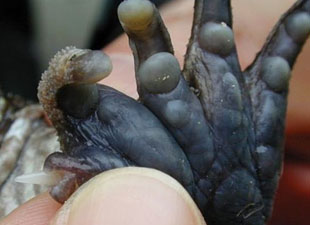
Japanese Fighting Frogs Use ‘Wolverine Claw’ During Combat
A Japanese scientist has discovered a rare breed of frog which has combat-ready retractable spikes that shoot from its fingers.