


The Asian Scientist 100
Lu Ke

Institution
Chinese Academy of Sciences
Country
China
Field
Materials Sciences
Lu is the winner of the 2020 Future Science Prize (Physical Science Prize) for discovering and synthesizing a superior nanotwinned structure and gradient nanostructure.
(Photo: Future Science Prize)
AWARDS
- Future Science Prize 2020
Related articles
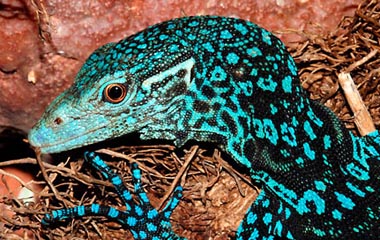
New Guinea Photo Gallery: 1,000 New Species Discovered
We take a glimpse into the bold and beautiful New Guinea, where 6-8 percent of the Earth's species roam freely.

Fossils From Australia Suggest Primitive Animals Had 20-20 Vision
Palaeontologists have uncovered half-a-billion-year-old fossils of compound eyes, confirming that primitive animals had excellent vision.

Rock Samples May Explain Causes Of High-Magnitude Earthquakes
What causes large-scale destructive earthquakes, like that of the 2011 Tohoku Earthquake in Japan? Rock samples from the Pacific Ocean may reveal the answer.

Scientists Decode Mutant Mice With Extra Set Of Ribs In Neck
Scientists have finally explained the mystery behind an odd-looking mutant mouse that had a short, kinky tail and an extra set of ribs in its neck.

Asian Universities Push Forward In World Rankings
Asian universities have shown an improvement in their overall rank in the latest QS World University Rankings of life sciences.

7 Alternative Careers After Your PhD
So what happens if you have spent your entire PhD in pursuit of a scientific aim, but want to do a 180° and morph into an alternative career? We suggest 7 alternative careers for PhD students.
Researchers Identify Gene Mutation That Causes Rare Brain Disorder
Australian scientists have identified the gene mutation responsible for Kufs disease, a rare but fatal neurodegenerative disorder.

Adrenaline Reduces Allergic Reactions To Snakebite Anti-Venom, Study
Researchers have found that giving low-dose adrenaline reduces the risk of acute severe reactions to snakebite anti-venom.

Vietnam’s Cities And Forests Get A Boost From ADB
Vietnam is set to improve clean water access, conserve threatened forests, and ease urban gridlock, funded by a $1.38 billion financial assistance package from the Asian Development Bank.