


The Asian Scientist 100
Lu Ke

Institution
Chinese Academy of Sciences
Country
China
Field
Materials Sciences
Lu is the winner of the 2020 Future Science Prize (Physical Science Prize) for discovering and synthesizing a superior nanotwinned structure and gradient nanostructure.
(Photo: Future Science Prize)
AWARDS
- Future Science Prize 2020
Related articles
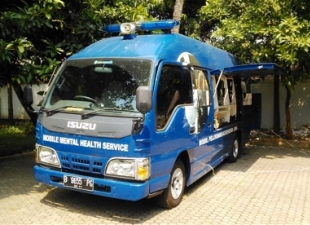
Mobile Mental Health Care Pilot Kicks Off In Jakarta
Indonesia has launched the Mobile Mental Health Service, an initiative aimed at improving mental health in the country.

SMART Professor Eugene Fitzgerald On Innovation In Singapore
We chat with Eugene Fitzgerald, PI of the Low Energy Electronic Systems at the Singapore-MIT Alliance for Research and Technology, on innovation in Singapore.

Flu Jab May Lower Heart Attack Risk, Study
A study has found that flu vaccination could lower the risk of heart attack in middle-aged people with narrowed arteries.

Cheaper Chinese Solar Panels Not From Low-Cost Labor, But Scaling Up
Comparison of photovoltaic manufacturing in the US and China shows that scale and supply-chain development, and not low-cost labor, is giving China the competitive advantage.

Genome Of “Living Fossil” May Help Explain How Limbs Evolved From Fins
Scientists have sequenced the genome of the coelacanth, an enigmatic prehistoric fish, providing valuable insights into how aquatic animals may have evolved limbs to live on land millions of years ago.
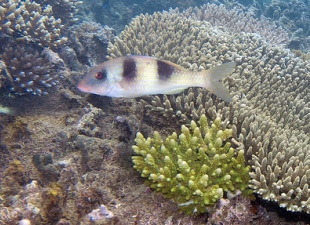
Coral Symbiont Genome Decoded For First Time
Researchers in Japan have decoded the genome of a coral symbiont for the first time, a breakthrough for coral biology research.

Vietnam Vets Twice As Likely To Have Leukemia, Study
Vietnam war veterans have double the rate of chronic lymphatic leukemia compared to the general population, says a new study.

Asian Consumers Still Very Traditional: Survey
A new study finds that traditional values continue to hold sway among Asia’s consumers, who value the family, believe in hard work, and are financially conservative.

17 Chinese Cities Join Smoke-Free Program
17 Chinese cities have benefited from a program launched by the Emory Global Health Institute – China Tobacco Control Partnership to curb tobacco use.