


The Asian Scientist 100
Lu Ke

Institution
Chinese Academy of Sciences
Country
China
Field
Materials Sciences
Lu is the winner of the 2020 Future Science Prize (Physical Science Prize) for discovering and synthesizing a superior nanotwinned structure and gradient nanostructure.
(Photo: Future Science Prize)
AWARDS
- Future Science Prize 2020
Related articles

The Epigenetic Switch That Triggers Fat Cell Maturation
How do preadipocytes maintain plurpotency while remaining poised for differentiation? A unique bivalent epigenetic switch may be the answer.
Topical Steroid Use In India “Out Of Control,” Says Expert
The lack of regulation surrounding the sale of topical steroid creams in India has led to side effects such as thin skin and an increased risk of bacterial and fungal infections, doctor says.

Smart Chip Warns You If Your Battery Is About To Catch Fire
A smart chip using electrochemical thermodynamics measurements could help extend the lives of batteries and warn of potential malfunctions.
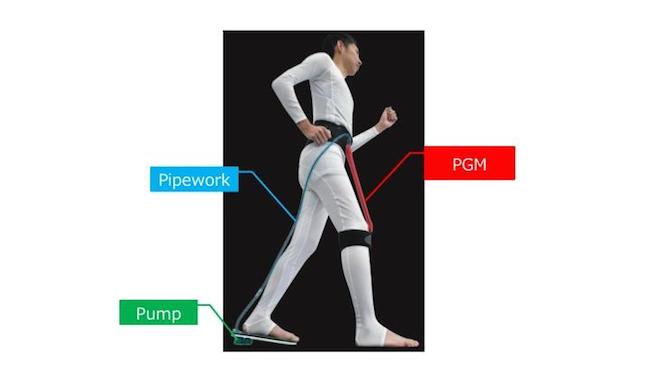
A Self-Powering Suit For Athletes And The Elderly
Researchers in Japan have developed a lightweight assisted mobility device that could be useful for both the elderly and athletes.

How Thin Film Superconductors Withstand Strong Magnetic Fields
Internal magnetic fields in thin films of MoS2 help them to withstand external magnetic fields of up to 37 Tesla, scientists say.

MERS Vaccine Unlikely Soon, Experts Say
Due to the difficulty of finding a suitable animal model to study the disease, researchers do not expect a working MERS vaccine within the next few years.

The Art And Science Of Parenting
Are you an 'arts' or a 'science' person? Our columnist, Dora Yip, suggests that the divide between arts and sciences may not be so distinct.

Well-Preserved Homo Erectus Skull Discovered in Eastern China
A Homo erectus skull estimated to be between 150,000 and 412,000 years old has been uncovered in Eastern China.

Putting The Brakes On Harmful Allergic Reactions
Cytokines such as interferon-beta, gamma and interleukin-27 help to switch off the long-lived innate immune response to prevent unnecessary inflammation, study shows.