


The Asian Scientist 100
Lu Ke

Institution
Chinese Academy of Sciences
Country
China
Field
Materials Sciences
Lu is the winner of the 2020 Future Science Prize (Physical Science Prize) for discovering and synthesizing a superior nanotwinned structure and gradient nanostructure.
(Photo: Future Science Prize)
AWARDS
- Future Science Prize 2020
Related articles

Turning Sunrays Into Gold
Ms. Tetchi Cruz-Capellan, founder of the Philippine Solar Power Alliance and CEO of SunAsia Energy, harvests the sun to power the Philippines.

Bringing Sight To The Blind
Professor Masayo Takahashi, who performed the world's first induced pluripotent stem cell-derived transplant into humans, has a vision for stem cells in the clinic.
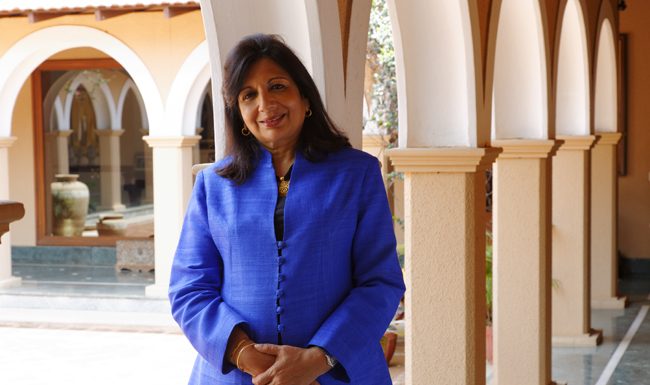
India’s First Lady Of Biotech
Ms. Kiran Mazumdar-Shaw, chairman and managing director of Biocon Limited, talks to Asian Scientist Magazine about the challenges faced by biotech companies in Asia.

Inspiring Minds, Fueling Passion At The Global Young Scientists Summit 2016
Liu Yuchun, a participant of the five-day Global Young Scientists Summit 2016, shares her experiences from the conference.

Sugars, Science & Society
Professor Wong Chi-Huey, president of Academia Sinica of Taiwan, has built his career on carbohydrates. He shares his motivations for research and the impact science can have on society.

Asia: Where The Cosmetics And Skin Care Industry Reigns Supreme
Asian consumers are among the most discerning and demanding of P&G’s customers, and intensive research has gone into understanding their needs.

Placental Microvilli ‘Grow’ With The Flow
Researchers discovered that shear forces caused by fluid flow in the mother’s body are key to microvilli formation and subsequent cell function in the placenta.

India’s Astrosat Takes Its First Images Of The Crab Nebula
India's first space observatory satellite has yielded its first results: images of the Crab Nebula, a supernova remnant in the constellation of Taurus.

Using ‘Time Stamps’ To Understand The Birth Of Our Universe
Theorists have proposed that you can confirm theories of how our universe was created using ‘time stamps’ called primordial standard clocks.