


The Asian Scientist 100
Long Ran

Institution
University of Science and Technology of China
Country
China
Field
Chemistry
Long won the 2017 L’Oréal UNESCO For Women in Science International Rising Talent award for her research on photocatalysts for carbon dioxide reduction.
(Photo: L’oréal Foundation)
AWARDS
- 2017 LOréal-UNESCO For Women in Science International Rising Talent Award
Related articles
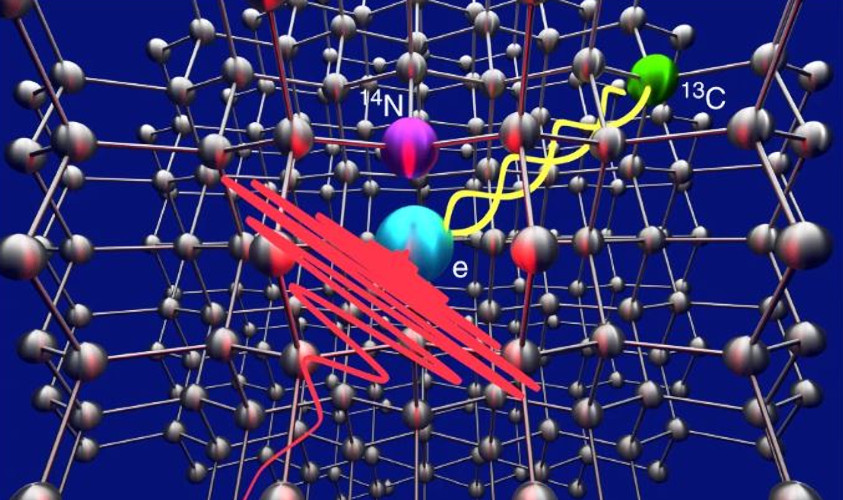
Teleporting Quantum Information In A Diamond
Researchers in Japan have made use of nitrogen-vacancy defects to teleport quantum information within a diamond.
Starve & Squeeze To Keep Egg Cell Supply Fresh
Researchers in Japan have shown that reduced oxygen and mechanical compression play roles in achieving and maintaining a dormant state in mouse egg cells.

Where Will Evolution Take Us In The Fourth Industrial Revolution?
Evolution has helped us understand where we came from, but can it also give us a hint about where we are headed in the fourth industrial revolution?

How Pluto And Other Trans-Neptune Objects Formed
Computer simulations modeling the formation of trans-Neptunian objects could help us understand how the entire Solar System came about.

Surveillance Drones Can Now Transmit 4K Video
Criminals beware; millimeter wave communication means that surveillance drones can now transmit high-resolution video in real-time.

Two Thai Dinosaur Species Related To T. Rex
Analyzing fossils found 30 years ago, researchers have identified two new dinosaur species from Thailand.

Australia’s Engineer In Office
Australia’s Minister for Industry, Science and Technology, the Honorable Karen Andrews MP, plans to fight climate change and support women in STEM.

The Anatomical Link Between Cognition And Perception In Autism
The posterior superior parietal lobule links behavioral inflexibility and perceptual rigidity in patients with autism, scientists say.
The Era of Nanorobots: How Technology Is Reinventing Medicine
Biomedical engineers have a new futuristic platform to take cancer head on.