


The Asian Scientist 100
Long Ran

Institution
University of Science and Technology of China
Country
China
Field
Chemistry
Long won the 2017 L’Oréal UNESCO For Women in Science International Rising Talent award for her research on photocatalysts for carbon dioxide reduction.
(Photo: L’oréal Foundation)
AWARDS
- 2017 LOréal-UNESCO For Women in Science International Rising Talent Award
Related articles

Embracing Futuristic Technology For Asia’s Growth
Panel speakers at the Leaders in Science forum discussed the importance of embracing technologies of the future.

Toothy Insights Into Ancient Elephants’ Changing Diets
Researchers analyzed the wear and tear on fossilized elephant teeth to unearth the diets of these prehistoric animals.

The Secret To Increasing Solar Cell Efficiency Is In The Air
Perovskite solar cells increase in efficiency when exposed to moisture in ambient air for a few hours, a study finds.

Scientists Grow Tissues Resembling Human Mid-Brains
Grown from stem cells in the laboratory, these mid-brain structures could one day be used to test drugs for aging-related brain disorders.
Wake Up and Smell The Roses—Virtually
You can now send tastes, smells and even kisses virtually. A new age of virtual reality involving all five senses is here, with Adrian Cheok of the Imagineering Institute at its forefront.

Heat Is Melting Productivity In Southeast Asia
Climate change effects in the region could slash work hours by up to 40 percent by 2050, according to studies.

Leading The Disruption Of Tissue Imaging
HistoIndex offers fully-automated, stain- and label-free imaging systems, assisting scientists and clinicians in delivering purely objective tissue assessments and taking the guesswork out of tissue diagnosis.

‘Smashing’ Radioactive Particles Can Help Clear Nuclear Waste
Scientists in Japan may have found a way to manage nuclear waste more easily, by converting two major radioactive isotopes found in nuclear waste into more easily managed isotopes.
These Self-Organizing Microspheres Swarm Like Honeybees
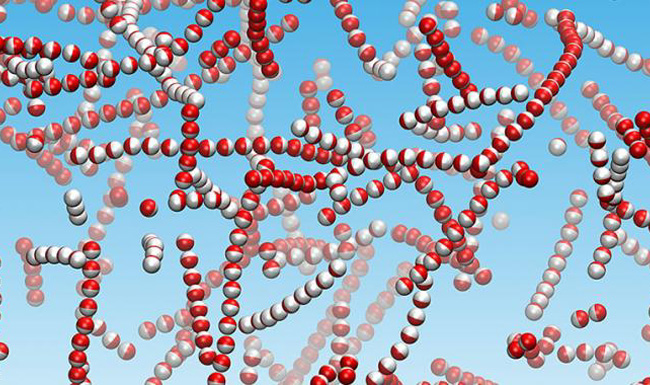
Soft-matter particles, named Janus colloids after the two-faced Roman god, can be manipulated with electricity to form swarms, chains and clusters, a study shows.