


The Asian Scientist 100
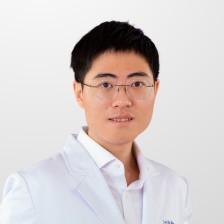
Hei Ming Lai
Institution
The Chinese University of Hong Kong
Country
Hong Kong
Field
Biomedical Sciences
Lai won the 2024 Croucher Tak Wah Mak Innovation Award for leading research in creating a 3D spatial multi-omics platform for clinical diagnostics and spatial biology research.
(Photo: The Chinese University of Hong Kong)
AWARDS
- 2024 Croucher Tak Wah Mak Innovation Award
Related articles

Corkscrew Design Helps Drug Delivery Robots Stick To Cancer Cells
Researchers in South Korea have developed a microrobot shaped like a corkscrew with a needle at its end for drug delivery.

Wikipedia’s Jimmy Wales On Fake News During The Pandemic (VIDEO)
How can we battle the ‘infodemic’ of misinformation that has spread almost as quickly as the coronavirus itself? Hear from Jimmy Wales, the co-founder of Wikipedia on this webinar.

The Downsides Of Too Much Social Interaction
Using simulations of behavior spread in complex networks, researchers in Singapore have discovered that excessive social interaction reduced collective response.

Giving Cell-Based Seafood The Shiok Factor (VIDEO)
Instead of farming meat from animals, Dr. Ling Ka Yi and her team at Shiok Meats are harvesting animal-free crustacean meats from cells.

Building The Foundations Of 5G (VIDEO)
CEO of Singapore-MIT Alliance for Research and Technology, Eugene Fitzgerald, is leading a team to develop the next generation of computer chips.

A*STAR’s Chief Scientist On COVID-19 Immunity And Antibody Drugs (VIDEO)
Catch Sir David Lane, A*STAR’s Chief Scientist and leading antibody expert, in our upcoming Wildtype Media Expert Opinion webinar.

Flattening The Complexity Of Quantum Circuits
By arranging qubits in a pseudo two-dimensional array, scientists have simplified the construction of quantum computers.

Elusive Kondo Cloud Seen For The First Time
An international team of scientists has observed Kondo clouds, a physical phenomenon first predicted nearly 90 years ago.
Transmitting Data At The Speed Of Light (VIDEO)
Associate Professor Dawn Tan is harnessing light’s unique properties to bring data transmission up to ultra-fast speeds.