


The Asian Scientist 100
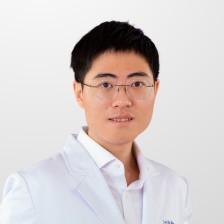
Hei Ming Lai
Institution
The Chinese University of Hong Kong
Country
Hong Kong
Field
Biomedical Sciences
Lai won the 2024 Croucher Tak Wah Mak Innovation Award for leading research in creating a 3D spatial multi-omics platform for clinical diagnostics and spatial biology research.
(Photo: The Chinese University of Hong Kong)
AWARDS
- 2024 Croucher Tak Wah Mak Innovation Award
Related articles

Igniting Innovation – An Interview With Amy Chung Of Containers Printers
With almost four decades of open innovation under their belt, Containers Printers has successfully enhanced their products through collaboration with contacts in and outside of Singapore.

Riding The New Wave Of Wastewater Treatment Technologies
The flood of industrial wastewater generated in recent decades has led to new and improved wastewater treatment technologies. Download our white papers to find out more.

Nuts & Bolts—Towards A Future Without Food Waste
Learn more about the three Tech Offers on food waste valorisation and develop products that are healthy for consumers as well as the planet.

Nuts & Bolts—Employing Robot Colleagues For Warehouse Work
These four Tech Offers would revolutionise warehouses through logistics technology.
Zhurong Rover Takes China To Mars
As China’s first rover on Mars, Zhurong is set to probe the Red Planet’s magnetic field and search for subsurface water, making its mark in a new era of space voyages.

New Device Helps Robots Get A Grip
An all-round gripper developed by South Korean researchers can freely handle objects regardless of shape and material.

Asia’s Scientific Trailblazers: Sham Mai Har
After navigating a career full of surprising opportunities, Chinese University of Hong Kong Pro-Vice-Chancellor Sham Mai Har is now building a research culture that empowers rising scientists.
Engineering The Future Of Asia
By working at the intersections of the physical, digital and biological spheres, Asia's engineers are ushering in the Fourth Industrial Revolution.
Asian Scientist Magazine’s April 2021 Roundup
Celebrate the region’s best scientists and their trailblazing efforts through Asian Scientist Magazine’s top stories from April 2021.