


The Asian Scientist 100
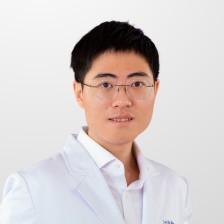
Hei Ming Lai
Institution
The Chinese University of Hong Kong
Country
Hong Kong
Field
Biomedical Sciences
Lai won the 2024 Croucher Tak Wah Mak Innovation Award for leading research in creating a 3D spatial multi-omics platform for clinical diagnostics and spatial biology research.
(Photo: The Chinese University of Hong Kong)
AWARDS
- 2024 Croucher Tak Wah Mak Innovation Award
Related articles

Asia Hits New Milestones In 2021 Times Higher Education Rankings
By improving upon research and industry indicators, Asia’s top universities are continuing to climb the 2021 THE World University Rankings.

Catalyzing Innovation In Deep Tech (VIDEO)
As CEO of SGInnovate, Dr. Lim Jui supports budding scientist-entrepreneurs as they leverage deep tech to take on the biggest problems of Singapore—and the world.

Back To Basis: Restoring Trust In AI (VIDEO)
BasisAI CEO Liu Feng-Yuan is championing the responsible use of artificial intelligence—helping organizations make better decisions in the process.

Making STEM Accessible To All (VIDEO)
By studying social and cognitive development, Dr. Setoh Pei Pei works with parents and children to recognize the limitless possibilities offered by the world of STEM.

Reaching Everyone Through Affordable Healthcare (VIDEO)
By delivering affordable medical services, reach52 CEO Mr. Edward Booty is empowering underserved communities to lead better, healthier lives.

Creating Sustainable Cities By Design (VIDEO)
Through sustainable design, Professor Jason Pomeroy blends creativity and research to create architectural feats at minimal cost to the planet.

Ready The Robots: Gear Up For #AskAnExpert Season 2!
From bionic baristas to lifelike androids, robots are taking over Asian Scientist Magazine’s #AskAnExpert Season 2!

Pushing The Boundaries Of Physics In Asia
Even as Asia's leading physicists break new ground in quantum and space technologies, they retain a deep reverence for ancient traditions that others may never fathom.

How To Build A Culture That Is Open To Innovation
Leading transformation can be challenging; here are four ways to guide your organization’s journey towards open innovation.