


The Asian Scientist 100
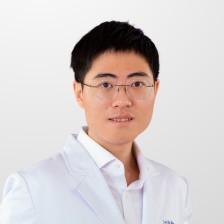
Hei Ming Lai
Institution
The Chinese University of Hong Kong
Country
Hong Kong
Field
Biomedical Sciences
Lai won the 2024 Croucher Tak Wah Mak Innovation Award for leading research in creating a 3D spatial multi-omics platform for clinical diagnostics and spatial biology research.
(Photo: The Chinese University of Hong Kong)
AWARDS
- 2024 Croucher Tak Wah Mak Innovation Award
Related articles

Impatience Could Be A Sign Of Cellular Aging
Impatience and a risk-taking attitude could be indicators of shortened telomeres, which have been linked to aging and risk of chronic disease.

Breaking Bad, Bacteria-Style
Move over, yeast. These genetically modified Escherichia coli bacteria can produce 300 times more thebaine—a morphine precursor—from the same amount of sugar.

Fast Radio Bursts Solve The Mystery Of The Missing Matter
Scientists have detected a fast radio burst coming from a galaxy billions of light years away, helping to confirm the presence of previously ‘missing’ matter.

Packaging Made Out Of Shellfish Extract Doubles Food Shelf-Life
This biodegradable, non-toxic film made out of chitosan, a polymer derived from crustacean shells, could be very useful in food technology.
Cipla Strengthens Presence In US Market
The UK arm of India-based pharmaceutical Cipla has acquired two US-based companies to further their reach in that region.

How Social Experiences Shape The Sex Lives Of Flies
Male fruit flies with the fru mutation are hypersensitive to visual sexual stimulation, but only if they were raised in groups.

The Case Of The Mysterious Missing Dinosaur Footprints
Some intriguing dinosaur tracks found in China show only the hind prints, with the front ones missing. Why?
Thai Tiger Numbers Are Slowly Bouncing Back
The tiger population in a Thai wildlife reserve is increasing, thanks to enhanced protection measures by the Thai government and the Wildlife Conservation Society.

The Pragmatic University-Builder
Although he once wanted to be a musician, Professor Cham Tao Soon instead became one of Singapore's pioneering engineers, starting what is today the Nanyang Technological University.