


The Asian Scientist 100
Hei Ming Lai

Institution
The Chinese University of Hong Kong
Country
Hong Kong
Field
Biomedical Sciences
Lai won the 2024 Croucher Tak Wah Mak Innovation Award for leading research in creating a 3D spatial multi-omics platform for clinical diagnostics and spatial biology research.
(Photo: The Chinese University of Hong Kong)
AWARDS
- 2024 Croucher Tak Wah Mak Innovation Award
Related articles

When Punches Fly in Cyberspace
SMU Associate Professor Gary Chan examines how legal practice has changed in response to the Internet and technology.

Raising Geese Over Daughters
It is more profitable to raise geese than daughters, or so says a Chinese proverb. How far have we really come in terms of gender equality and parity?

Once An Industry Wonder, Now A Silent Killer
Asbestos has long been woven into human history, but we are only just beginning to feel its devastating impact on our health here in Asia.

The Future Of Electronics Is Flexible
Researchers have developed a new type of organic semiconductor that is both efficient and stable—ideal for next-generation flexible electronics.

Researchers Discover Why Plants Wither
In stressful situations such as lack of water, plants cannot remove the harmful byproducts of photosynthesis, withering and dying as a result.

Building A Treasure Chest Of Medical Data
Professor Kanagaratnam Shanmugaratnam set up the Singapore Cancer Registry in 1967, a time when everything had to be done by hand; this meant meticulously transferring decades of data to now-obsolete punch cards.

A Laser-Focussed Life
From protecting the navy’s ships to boosting Singapore’s electronic warfare capabilities, Professor Su Guaning has been decorated many times for his pioneering defence research.

Bloom Where You Are Planted
Even though she wasn't given an opportunity to study science earlier in life, retired NUS botany Professor Gloria Lim eventually made a name for herself in mycology.
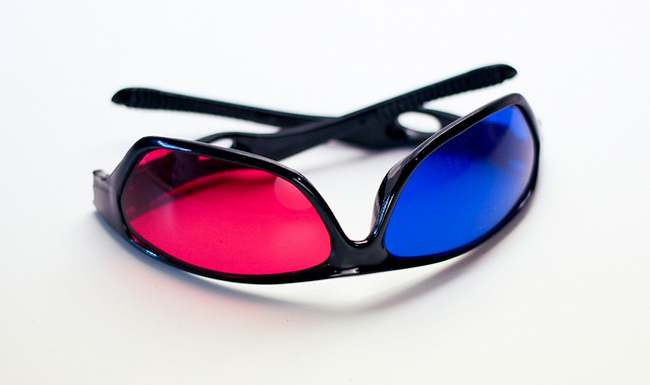
Nanomagnetic Holograms For Glasses-Free 3D Viewing
Using nanomagnets, researchers have developed a holographic display system that has nano-sized pixels and can be viewed over a wide angle.