


The Asian Scientist 100
Hei Ming Lai

Institution
The Chinese University of Hong Kong
Country
Hong Kong
Field
Biomedical Sciences
Lai won the 2024 Croucher Tak Wah Mak Innovation Award for leading research in creating a 3D spatial multi-omics platform for clinical diagnostics and spatial biology research.
(Photo: The Chinese University of Hong Kong)
AWARDS
- 2024 Croucher Tak Wah Mak Innovation Award
Related articles

The Must-Have Tools Of A Young Science Communicator
What do you do when you have a science-obsessed child with many interests? Get him blogging, scrapbooking and making videos, of course!

From Schrödinger To YouTube, The House Cat Is Here To Stay
Our feline overlords aren’t just useful for cuddles, funny videos and silly memes; these domesticated darlings have served many purposes over history.

Why Are Asians So Good At Maths And Science?
Asian universities are constantly coming up tops in international rankings. Is there a science to why Asian students excel academically?

Is Change Really Coming? The Role Of Science In The Duterte Administration
It remains to be seen if Philippines president-elect Rodrigo Duterte will shine a spotlight on science and technology when he assumes office on June 30.

Stars That Live Fast & Die Young
Researchers have found that some stars in a nearby globular cluster are dying prematurely as they skip the Red Giant phase in their growth.
The Way To A Zebrafish’s Heart Is Through Its Nose
As part of their courtship and mating rituals, female zebrafish release a pheromone that activates the males’ brains through their smell receptors.

Indian Parents Favor Sons Over Daughters For Free Heart Treatment
Gender bias exists when it comes to treating inborn heart disease in Northern India, according to a study.
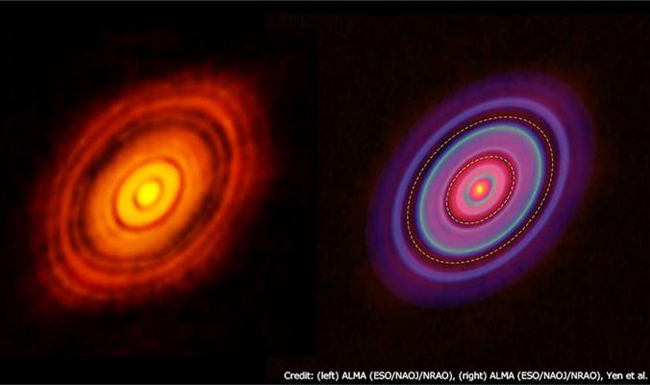
Gaps In Young Star’s Gas Disk Could Indicate Baby Planets
Two gaps in the gas disk around the young star, HL Tauri, are evidence of what might be newly-formed planets—challenging the belief that planets take millions of years to form.

7 Must-Read Stories In May 2016
From a Zika expert’s insights to India’s thrifty space spending, here are the stories that attracted the most clicks in May.