


The Asian Scientist 100
Hei Ming Lai
Institution
The Chinese University of Hong Kong
Country
Hong Kong
Field
Biomedical Sciences
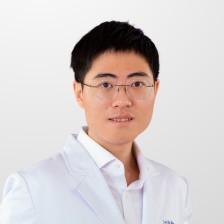
Lai won the 2024 Croucher Tak Wah Mak Innovation Award for leading research in creating a 3D spatial multi-omics platform for clinical diagnostics and spatial biology research.
(Photo: The Chinese University of Hong Kong)
AWARDS
- 2024 Croucher Tak Wah Mak Innovation Award
Related articles

Harmful Bacteria Hitch A Ride On Houseflies
Scientists in Singapore have sequenced the genomes of flies and their associated bacteria to demonstrate that flies may be used for disease monitoring.
How Bacterial Motors Shift Into High Gear
Using high-speed atomic force microscopy, scientists in Japan have uncovered the mechanism by which bacterial motors are assembled and activated.
A Dye-Free Method To Manufacture LCDs
Researchers in Japan have developed a scanning wave photopolymerization method for producing liquid crystal displays without the need for dyes.

CRISPR Caught In The Act
Using high-speed atomic-force microscopy, scientists in Japan have observed how the CRISPR/Cas9 complex cuts DNA in real-time.

Boosting The Antioxidant Content Of Tomatoes
Researchers in Hong Kong and France have genetically engineered tomatoes with enhanced antioxidant properties.

Flexible Flash Memory For Foldable Electronics
Scientists in South Korea have invented a flexible flash memory that meets existing industrial electronics standards.

China Overtakes The US On The TOP500 Ranking
For the first time since its inception, the number of supercomputers on the TOP500 list installed in China has surpassed that of the United States.

Licorice Extract Could Treat Parkinson’s Disease
By performing a screen of natural compounds, researchers in South Korea have identified licorice extract as a potential treatment for Parkinson’s disease.

Dusting Off The Mysteries Surrounding Dying Stars
The imbalance between aluminum oxide and silicate in the dust surrounding dying stars has been explained by scientists in Japan.