


The Asian Scientist 100
Max Lu
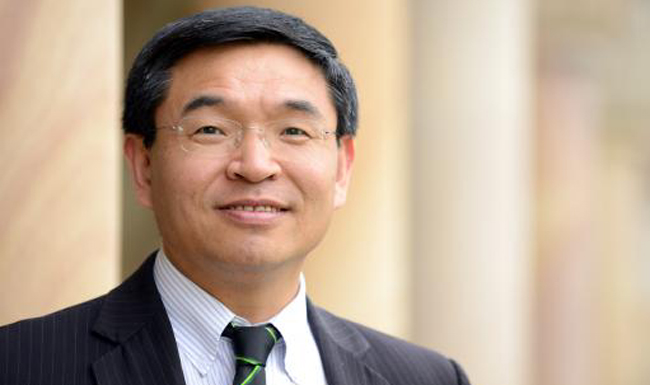
Provost and Senior Vice-President
Institution
University of Queensland, Australia
Country
China
Field
Chemistry
The Chemical Society of Japan gave Lu the Colloid and Surface Chemistry Lectureship Award 2015 for developing advanced materials in the areas of clean energy, the environment and healthcare.
(Photo: University of Surrey)
Related articles
Calorie Restriction Increases Longevity – Or Does It?
Surinder Baines examines the implications of research showing that calorie restriction may have a role in promoting longevity in mice.
Chunky Mobile Devices? Soft Graphene Could Help You Downsize
Monash University researchers have engineered a graphene-based device that is compact, yet lasts as long as a conventional battery.

New Evidence For Warm-Blooded Dinosaurs
A new study has thrown up new evidence suggesting that dinosaurs may be warm-blooded like birds and mammals, not cold-blooded like reptiles.

Algae Biofuels Unsuitable For Developing Nations, Study
The use of algae biofuels is not a suitable option for developing countries, according to a new study by researchers in Japan.

Deserts Turning Green From Rising Carbon Dioxide Levels, Study
Increased levels of carbon dioxide have helped boost green foliage across the world's arid regions over the past 30 years, reports a new study.

Australia’s Chief Scientist: We Need A National ‘STEM’ Strategy
Australia must have a strategy to ensure the country’s prosperity and boost its international standing in STEM, said Chief Scientist Professor Ian Chubb.

Study Shows 20 Minutes Of Yoga Stimulates Brain Function
Researchers report that a single, 20-minute session of Hatha yoga significantly improved participants' brain function.

Australia-China Joint Water Research Center Launched In Beijing
A new joint research center between Australia and China will address water resources management issues faced by both countries.
Human Breastmilk Is Protective During Infections, Study
Breastfeeding is protective when there is an infection in mothers or babies due to the immune cells found in breastmilk, says a new study.