


The Asian Scientist 100
Max Lu
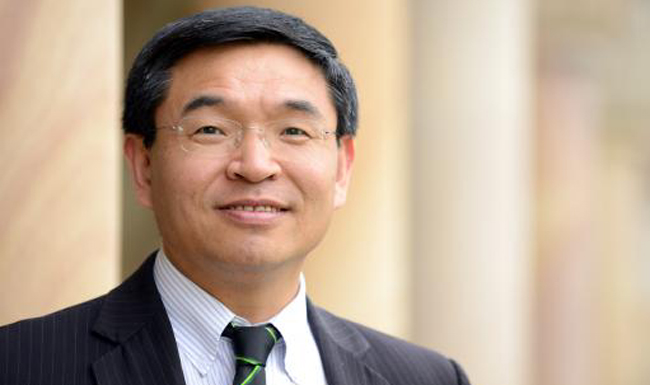
Provost and Senior Vice-President
Institution
University of Queensland, Australia
Country
China
Field
Chemistry
The Chemical Society of Japan gave Lu the Colloid and Surface Chemistry Lectureship Award 2015 for developing advanced materials in the areas of clean energy, the environment and healthcare.
(Photo: University of Surrey)
Related articles

Medicine’s New Stethoscope
Detecting cancers with a blood test sounds simple enough, but is it just hype or are liquid biopsies here to stay?

How To Win The Nobel Prize Of Supercomputing
Winning the ACM Gordon Bell Prize in High Performance Computing requires a team effort, says Professor Fu Haohuan, a member of the 12-man team that won the competition in 2016.

When Your Doctor Knows It All
IBM Watson is changing the practice of healthcare in both hospitals and homes with its ability to learn and apply huge volumes of information.
The Ocean Is Starting To Boil
Over the hundred years that they have been used, floating-point numbers have become so entrenched that replacing them would be like “boiling the ocean.” But Dr. John Gustafson believes he has done just that.

High Performance Healthcare
Thanks to all the data that is already available, the healthcare sector is ripe for a data-driven transformation. Here’s how supercomputers can make a difference.

When T Spells Trouble For Cancer
The world’s largest clinical trial of T-cells for cancer is being conducted by a Singapore-based biotech company, Tessa Therapeutics. Sim Shuzhen finds out more.

AI On Cloud Nine
The convergence of artificial intelligence and cloud computing is underway. Alibaba Cloud’s Dr. Min Wanli shares his insights on this revolution.
Forging New Paths In Cancer Diagnostics
HistoIndex is partnering with the University of Malaya and Pathomics Health to roll out an integrative diagnostics platform for the holistic analysis of patient tumor biopsies.

Soy Supplement Reduces Muscle Loss In Mice
Mice fed on a diet supplemented with a soy isoflavone had reduced muscle loss following experimentally-induced nerve damage, researchers say.