


LATEST NEWS

Researchers Increase OLED Device Lifetime Eightfold
By adding layers of a lithium-containing molecule to a thermally-activated delayed fluorescence material, researchers were able to increase its device lifetime without sacrificing efficiency.

Cheaper OLED Displays Without Precious Metals
Researchers have come up with a more cost-effective method of producing highly efficient organic light-emitting diode (OLED) displays, commonly used in HD TVs.
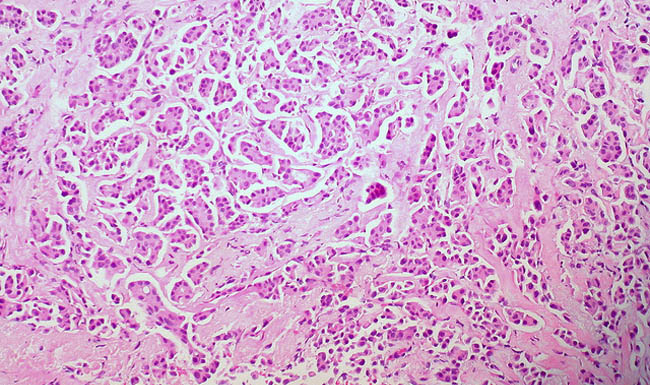
Breast Cancer Cells Accumulate Epigenetic Changes Over Time
Researchers have found that healthy tissue samples taken from women with breast cancer are already ‘marked’ as being susceptible to turning cancerous.

Moby-Dick And Lessons In Science Writing
Literature classics like Moby-Dick bring the natural world to life in vivid, beautiful and haunting ways. What if these novels were co-taught by literature and biology professors?

Treating Childhood Leukemia With Fewer Side Effects
Screening for variations in the NUDT15 gene could help reduce the dangerous side effects of a commonly used leukemia drug.

TV Dish Antennae As Radio Telescopes
Researchers show that radio telescopes constructed with ordinary TV dish antennae can easily be installed in any college campus.

Body-Powered Batteries That Dissolve After Use
These batteries can harvest biomechanical energy from the body and then simply dissolve once no longer needed, reducing the need for surgery.

MERS Adapts By Weakening During Outbreaks
To survive in nature and live together with its host during an outbreak, the MERS virus develops mutations that 'weaken' its effects.

Japan’s Particle Accelerator Achieves First Turns
Scientists at the SuperKEKB accelerator have succeeded at circulating beams of positrons and electrons in opposite directions to study particle collisions.


