


IN THE LAB

Moss Makes A Good Air Pollution Sensor
Moss responds rapidly to air pollutants, especially sulfur dioxide, making it useful as a real-time pollution sensor.

Skin Hardness A Better Measure Of Body Temperature
Scientists in South Korea have found that human body temperature can be better estimated by measuring skin hardness in addition to skin temperature and sweat rate.

Ion-Based AI Makes Smart Decisions
A research group in Japan has invented an ionic device that can make decisions based on electrochemical phenomena.
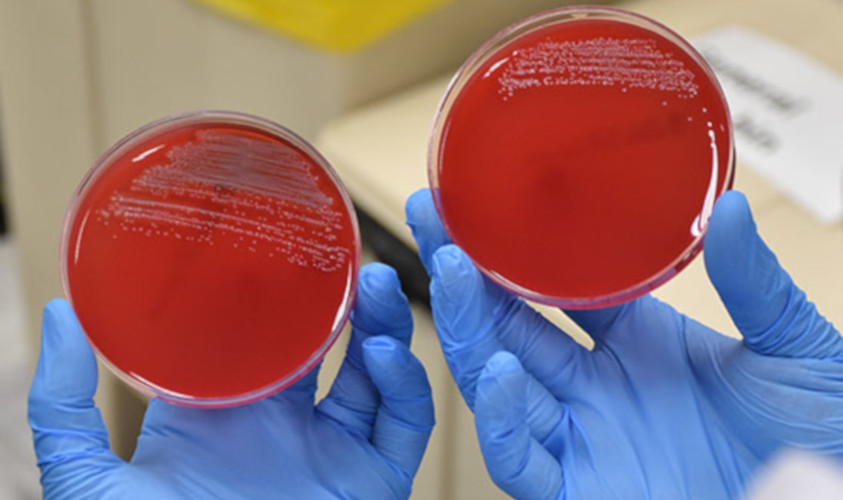
Viruses Supercharge Superbug Evolution
Viruses can transfer large chunks of bacterial genomes—including antibiotic resistance genes—among bacteria species.

Honey, I Shrunk The Particle Accelerator
By sending a beam of particles through plasma, researchers were able to accelerate those particles efficiently without large equipment like the Large Hadron Collider.

Deep Learning Aids Quake And Tsunami Detection
Deep neural networks have been used to detect magnetic field anomalies, which could allow faster and more accurate detection of earthquakes and tsunamis.

Boosting The Body’s Malaria-Fighting Capabilities
Researchers have identified a molecular pathway that makes natural killer cells more effective at eliminating the malaria parasite.

Self-Regenerating Catalysts Help Fuel Cells Go The Distance
This highly efficient and self-regenerating catalyst could help make solid oxide fuel cells more practical.

Perovskite Capable Of Efficient Light-To-Electricity Conversion
Scientists have found that perovskites exhibit the carrier multiplication effect which allows them to turn light into electrical energy efficiently.


