


Asian Scientist Newsroom

ABOUT
Asian Scientist Magazine is an award-winning science and technology magazine that highlights R&D news stories from Asia to a global audience. The magazine is published by Singapore-headquartered Wildtype Media Group.
Stories by Asian Scientist Newsroom

Using Zebrafish To Study Human Respiratory Diseases
Scientists have discovered genes in zebrafish which may be synonymous with the genes for developing hair-like structures in the human airway.

Shared Pain Brings People Together
Going through painful experiences together can change a group's behavior, promoting bonding and solidarity.
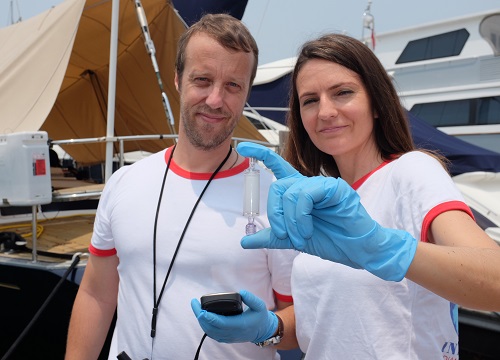
How To Become A Marine Biologist
A Singaporean university partners with other institutions to build a global network of citizen oceanographers.

Genetic Code Of Resilient Midges Unveiled
Researchers have deciphered the genetic mechanism of a species of small fly that is invulnerable to harsh conditions such as drought.

Bottom-Up For Self-Assembled Graphene Ribbons
By exploiting the properties of copper, scientists have developed a way to produce defect-free graphene nanoribbons in a specific configuration.

Graphene Enables Room Temperature Terahertz Detection
Scientists have built a terahertz radiation detector that has a range 100 times larger than the visible spectrum and can operate even at room temperature.

Elsevier Recognizes Young Indian Scientists
Elsevier and the National Academy of Sciences, India (NASI) announce the winners of the 2014 NASI-Scopus Young Scientist Awards.

Attacking Superbugs With New Drug Cocktails
A Singaporean team has discovered new ways to enhance the efficacy of drugs used to treat respiratory infections and antibiotic-resistant superbugs.

When It Comes To Risk, Grey Matter Matters
The volume of grey matter could be used as a biomarker for financial risk attitudes, researchers say.