


Asian Scientist Newsroom

ABOUT
Asian Scientist Magazine is an award-winning science and technology magazine that highlights R&D news stories from Asia to a global audience. The magazine is published by Singapore-headquartered Wildtype Media Group.
Stories by Asian Scientist Newsroom

Bangladesh’s Health Successes Shift Chronic Diseases To The Poor
A 24-year study has shown that chronic diseases in Bangladesh have shifted from the rich to the poor.

Genomic Data Improves Breast Cancer Diagnosis & Treatment
Two large scale genomic studies have helped identify strategies for developing more precise and effective treatments for breast cancer.

Why The Tobacco Plant Gave Up Its Immune System
A mutation in the Rdr1 gene has left Nicotiana benthamiana plants with a weakened immune system but also helped to ensure their survival in harsh climates.

7 Must-Read Stories In October 2015
From driverless cars to liquid microfluidics sensors, research from Singapore is heavily featured in our top articles published in October 2015.

Targeting p62 As A Possible Toxoplasma Vaccine
Scientists have discovered that the autophagy receptor p62 plays a key role in activating the killer T cells during infection with T. gondii.
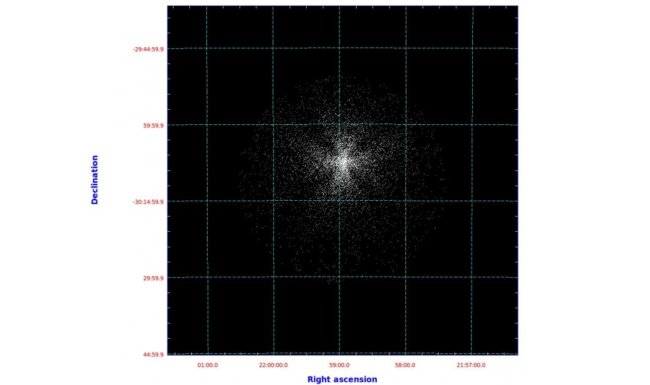
Astrosat’s Soft X-Ray Telescope Sees First Light
India's space observatory satellite, Astrosat, has acquired its first X-ray images of the quasar PKS 2155-304.

Teasing Out Protein Folding With Tiny Tweezers
Scientists were able to observe the folding and unfolding of a single membrane protein using magnetic tweezers.
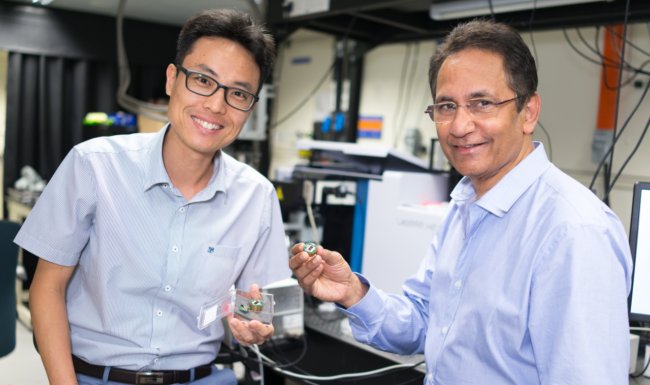
Add Graphene For Super Sensitive Magnetoresistance Sensing
A graphene-based magnetoresistance sensor has proven to be 200 times more sensitive than commercially available ones made of silicon or indium antimonide.

Wider Wavelengths For Perovskite Solar Cells
By mixing two distinct cation-based perovskite materials, scientists were able to generate a high quality perovskite material capable of absorbing longer wavelengths of light.