


Asian Scientist Newsroom

ABOUT
Asian Scientist Magazine is an award-winning science and technology magazine that highlights R&D news stories from Asia to a global audience. The magazine is published by Singapore-headquartered Wildtype Media Group.
Stories by Asian Scientist Newsroom

Gravitational Waves Triggered 10m Years Earlier Than Thought
According to supercomputer simulations, a collision of two galaxies triggers gravitational waves about ten million years after—a much faster process than previously assumed.

Like Kites, Messenger Molecules Need Tails To Function
In biological cells, messenger molecules called mRNA behave similar to kites, requiring a tail for stability.
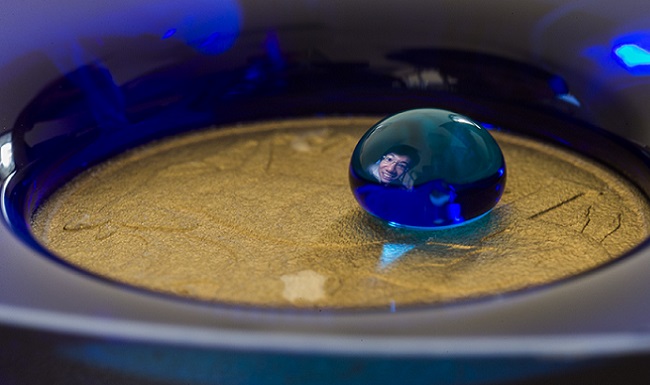
Waterproofing Gadgets May Just Be One Spray Away
The new protective coating could be used to waterproof mobile phones, prevent ice from forming on airplanes, or protect boat hulls from corroding.

Scientists Zoom Into Tooth Decay At The Nanoscale
The research has resulted in the first-ever three-dimensional map showing the positions of magnesium ions critical in the tooth decay process.

The Traffic System Within Living Cells: Chance Or Design?
Scientists' simulations have shown that the complex compartments and traffic systems within cells could arise randomly in 25 percent of cases.

Singapore Hospital To Attempt Guinness World Records Title
Were you born in KK Women's and Children's Hospital? On October 16 at Bishan Stadium, the hospital will be attempting a world record for the largest reunion of people born at the same hospital.

How To Increase Rice Yield? Make Stronger Hybrids
Using large-scale genomic mapping, researchers have analyzed over 10,000 rice lines to explore how cross-breeding produces better rice crops and higher yields.

Japanese Cell Biologist Wins 2016 Kihara Prize
Professor Hiroshi Iwasaki from the Tokyo Institute of Technology was recognized for his work into homologous recombination, a biological phenomenon that occurs in all living organisms.

Scientists Discover Atomic Structure Of Unusual Human Aichi Virus
The human aichi virus is a rather unusual but poorly characterized picornavirus that is very common and can cause severe gastroenteritis in children.