AsianScientist (Nov. 17, 2017) – Tomatoes are now even healthier than before, thanks to scientists at the University of Hong Kong (HKU) and the Institut de Biologie Moléculaire des Plantes (CNRS) in France. Their work is published in the Plant Biotechnology Journal.
Antioxidants are known to render positive health benefits and can be found naturally in fruits such as tomatoes. Vitamins A and E are known to possess antioxidant properties, and researchers have long sought to increase the levels of these vitamins and their precursors in fruits.
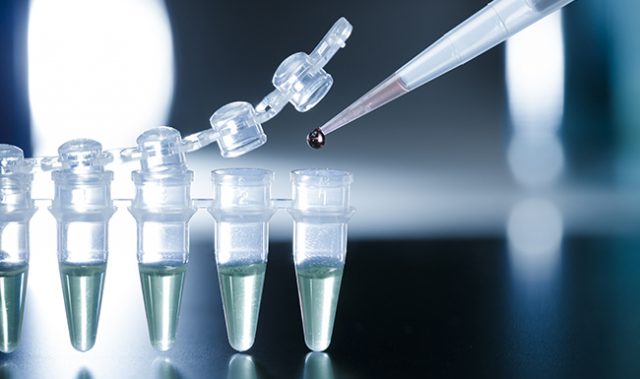
In this collaborative study, the researchers manipulated the plant isoprenoid pathway by using a variant of 3-hydroxy-3-methylglutaryl-coenzyme A synthase (HMGS). The HMGS DNA used in these experiments came from a food crop, Brassica juncea (Indian mustard), that yields edible leaves, stems and seeds.
Previously, the research group reported that the recombinant HMGS variant S359A, in which amino acid residue, serine, at position 359 was switched to alanine, exhibits ten-fold higher enzyme activity. The introduction of S359A in the model plant Arabidopsis increased phytosterol content.
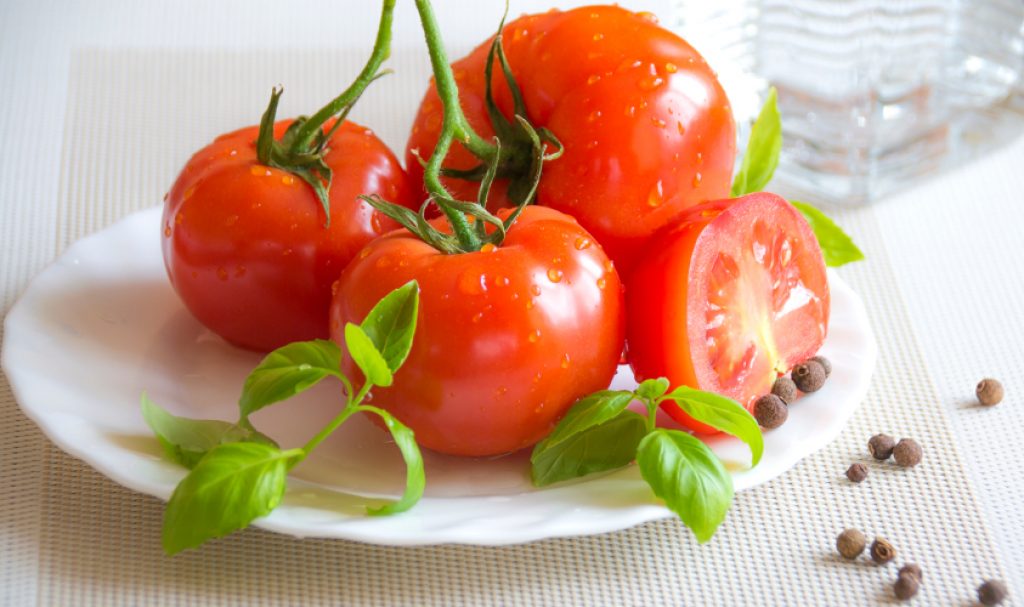
When HMGS was overexpressed in tomatoes, there were no differences in the appearance and size of the transformed tomato fruits. However, total carotenoids, including provitamin A and lycopene, increased by 169 percent and 111 percent, respectively.
Furthermore, carotenoid extracts from the transformed tomatoes exhibited 89.5 to 96.5 percent higher antioxidant activity than controls. Besides carotenoids, the transformed tomatoes had 494 percent higher levels of vitamin E, 210 percent higher levels of squalene and 94 percent higher levels of phytosterols. These observations were attributed to the increased expression of genes in the isoprenoid pathway.
“The accumulation of healthy components in food crops would add value to fruits and vegetables in the human diet, as well as enrich feed for livestock and aquaculture,” said Professor Chye Mee-len of HKU who led the research.
“Extracts with enriched phytosterols, vitamin E and carotenoids can be used in the production of anti-ageing cream and sun-care lotion. These compounds show excellent anti-inflammatory and antioxidant activity,” said Dr. Wang Mingfu of HKU who was a coauthor of the study.
The article can be found at: Liao et al. (2017) Improved Fruit α-tocopherol, Carotenoid, Squalene and Phytosterol Contents through Manipulation of Brassica juncea 3-Hydroxy-3-Methyglutaryl-COA Synthase1 in Transgenic Tomato.
———
Source: University of Hong Kong; Photo: Pexels.
Disclaimer: This article does not necessarily reflect the views of AsianScientist or its staff.