AsianScientist (Apr. 24, 2017) – Using induced pluripotent stem cells (iPSCs), researchers at the University of Hong Kong (HKU) have identified a gene mutation linked to Hirschsprung disease (HSCR), a congenital defect that leaves babies suffering from severe constipation and intestinal obstruction because the nerve cells which co-ordinate bowel movements are absent. Their findings have been published in Gastroenterology.
Babies born with HSCR will die unless the portion of the bowel with no nerve cells is surgically removed. Furthermore, the functional outcome of surgery is variable and a significant number of patients still suffer from life-long complications, ranging from intractable constipation, incontinence, enterocolitis to devastating short bowel syndrome, leading to not only tremendous psychosocial impact on the patients, but also a heavy financial burden to the health care system.
Although Hirschsprung disease is a global problem, it is particularly prevalent in Asia, affecting 1 in 3,000 babies. It is known that DNA changes disrupting the function of a gene called RET cause a severe form of the disease (total colonic aganglionosis). However, 80 percent of HSCR patients have short-segment HSCR disease (S-HSCR), which has not been associated with genetic factors.
Building on previous work published in 2009-2015, a team of researchers from HKU used iPSC to identify DNA changes associated with the disease. They first established numerous ‘diseased’ cell lines by reprogramming cells from a patient with total colonic aganglionosis and two patients with S-HSCR. They then assessed the migration and differentiation capacities of the different cell lines and found that RET mutations were associated with defects in migration and differentiation.
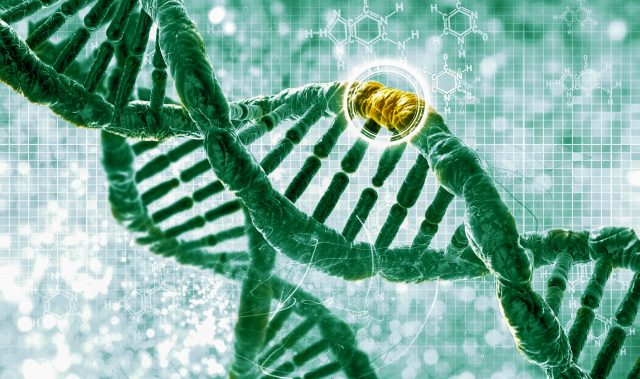
Using next-generation sequencing, the team successfully associated a DNA change in the vinculin gene (VCL) with S-HSCR. They then used CRISPR/Cas9 gene editing to correct both HSCR-assocated DNA mutations, namely RET G731del and VCL M209L. These corrections restored the cells’ differentiation and migration capacities.
“Our study shows that disease relevant cells can be generated using patient-specific stem cells which carry the same genetic background as of the patient,” said study lead author Elly Ngan Sau-wai, an associate professor at HKU.
“Using the disease relevant patient cells in biomedical research will help address how genetic background may affect the disease phenotypes, paving a way to develop personalized medicine.”
The article is available at: Lai et al. (2017) Correction of Hirschsprung-associated Mutations in Human Induced Pluripotent Stem Cells, via CRISPR/Cas9, Restores Neural Crest Cell Function.
———
Source: University of Hong Kong; Photo: Shutterstock.
Disclaimer: This article does not necessarily reflect the views of AsianScientist or its staff.