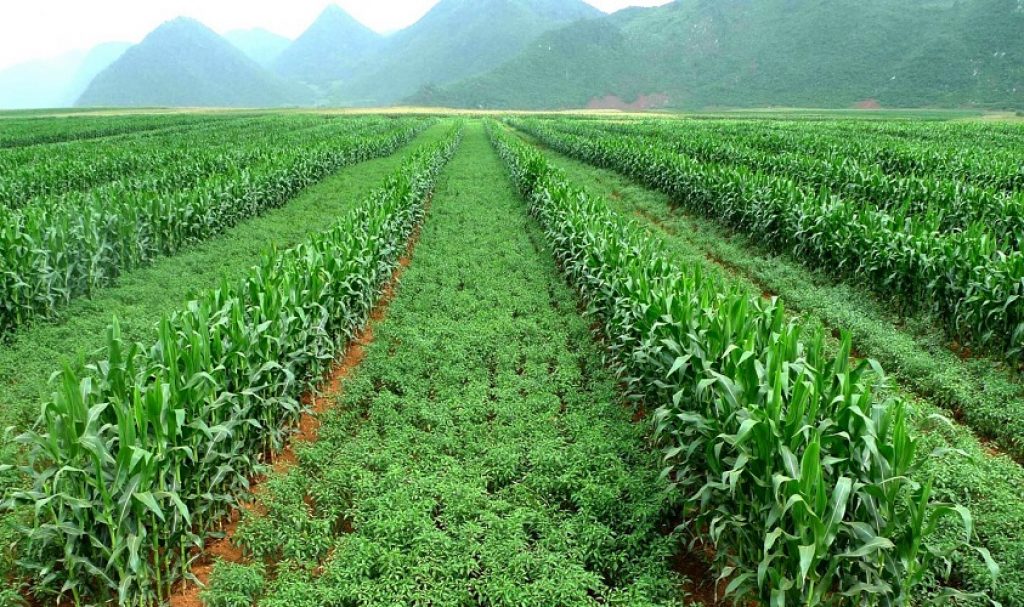
AsianScientist (Sep. 20, 2017) – Scientists in China have demonstrated that growing chili with corn, in a practice known as intercropping, can reduce soil erosion and improve crop yields. They report their findings in the Agronomy Journal.
For farmers, soil erosion can be a major problem as it diminishes the fertility of the land. This reduces crop yield, resulting in significant economic loss. The practice of intercropping—growing more than one crop per season—can benefit the soil in several ways.
Firstly, the additional soil cover provided by the second crop helps reduce erosion. Secondly, the plants help soak up extra water and nutrients. This additional ‘pull’ of the nutrients can help reduce surface runoff. Finally, growing different crops on the soil increases the biodiversity. This can help with pest and disease control.
In this study, the researchers compared intercropping corn with either setaria grass, used in forage, or chili. Over a four-year period, the research team measured runoff, erosion and economic return for corn and chili, planted alone or intercropped with setaria grass. The research was conducted in the Yunnan Province of southwest China. All fields were rain-fed, with no irrigation.
“Reducing erosion can sustain or increase soil fertility and productivity,” said Professor Wu Bozhi of Yunnan University. “We researched intercropping systems that could reduce erosion, stabilize food production and increase farmers’ incomes.”
The researchers showed that farmers gained the most economically benefit from growing chili with their corn. Research sites that had either chili or setaria crops on them showed less soil erosion and made more money. But chili resulted in the greatest economic gain, bringing in an extra US$1,000 to US$2,000 per year on each hectare farmed.
Another discovery was made during a drought year, in 2009. All the experimental fields had a lower economic return that year, except the one field where corn and chili were intercropped. This suggests that intercropping systems can generate more stable incomes than single crops.
Although these are new farming techniques, the research team is optimistic that the economic benefits will help spread these new methods across southern China. Because of its faster economic impact, the main recommendation for hilly areas in southern China is corn intercropped with chili. Of course, commodity prices change over time, so the design of intercropping systems will be dependent on market opportunities.
The article can be found at: Ouyang et al. (2017) Productivity, Economic, and Environmental Benefits in Intercropping of Maize with Chili and Grass.
———
Source: American Society of Agronomy; Photo: Wu Bozhi.
Disclaimer: This article does not necessarily reflect the views of AsianScientist or its staff.