AsianScientist (Oct. 19, 2016) – 3D live imaging has shed light on the formation of lateral roots in plants, a finding that could be used to alter plant growth. The study describing these findings has been published in Development.
Plants grow new branched roots from existing roots, and their root systems consist of the primary root, which is the first to grow after germination; lateral roots, created from internal tissue in existing roots such as the primary root; and adventitious roots, which sprout from above ground tissues.
There is only one primary root, but after plant germination many lateral roots and adventitious roots are created. Since these latter types make up the majority of the root system, they have a large influence on its structure. However, not much is known about the mechanism that creates lateral roots from a small number of cells.
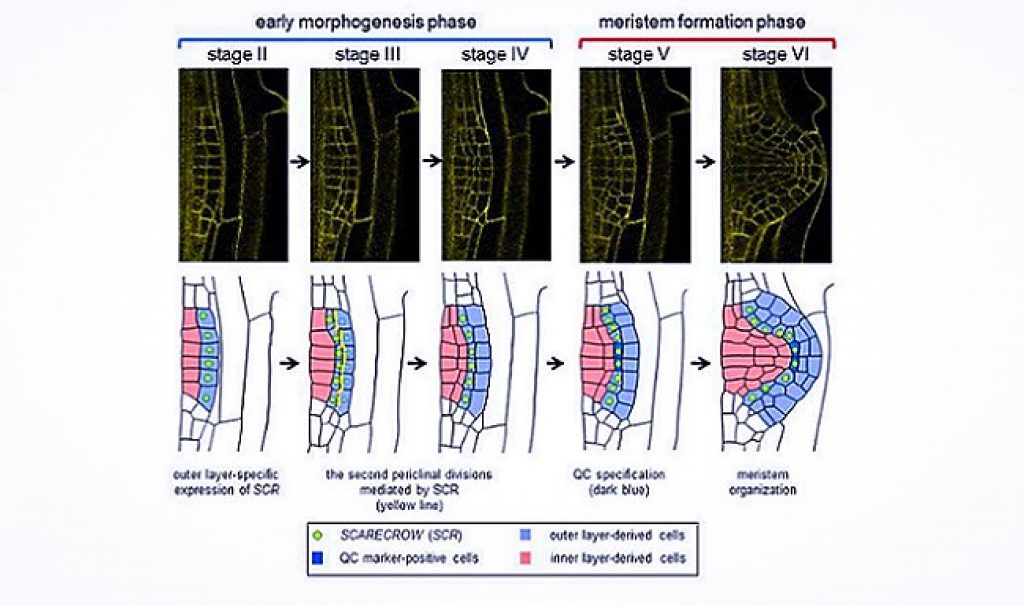
The research group, which includes Professor Fukaki Hidehiro and Project Assistant Professor Goh Tatsuaki from Kobe Univesrity, established a method enabling long-term observation of the developmental process of new or lateral roots formed after germination of the model plant Arabidopsis thaliana. Their method is based on 3D live imaging technology using confocal laser microscopy.
By comparing plant variants that showed abnormalities in the formation of lateral roots to plants with a natural development process, they could detail part of the mechanism that develops lateral roots. With the ability to observe the development process of lateral roots over time on a cellular level, scientists can deepen their understanding of various processes: how individual cells divide, how they mutate, and how the cells coordinate to create new roots, for example.
Additionally, if the root formation mechanism in plants is revealed further, this could potentially be used to control plant growth by artificially altering root system architecture.
The article can be found at: Goh et al. (2016) Quiescent Center Initiation in the Arabidopsis Lateral Root Primordia is Dependent on the SCARECROW Transcription Factor.
———
Source: Kobe University.
Disclaimer: This article does not necessarily reflect the views of AsianScientist or its staff.