AsianScientist (Sep. 26, 2016) – Researchers in Japan may have found a protein can prevent breast tumors from forming in mice. Their findings were published in the American Journal of Pathology.
The onset of breast cancer is closely related to the sex hormone estrogen. During pregnancy, elevated blood estrogen levels induce the proliferation of mammary epithelial cells, prompting the breasts to prepare for lactation. The mammary epithelial cells eventually stop proliferation at the late stages of pregnancy; if this process were to be impaired, breast tumor formation may result. The mechanism of how this happens, however, remains unclear.
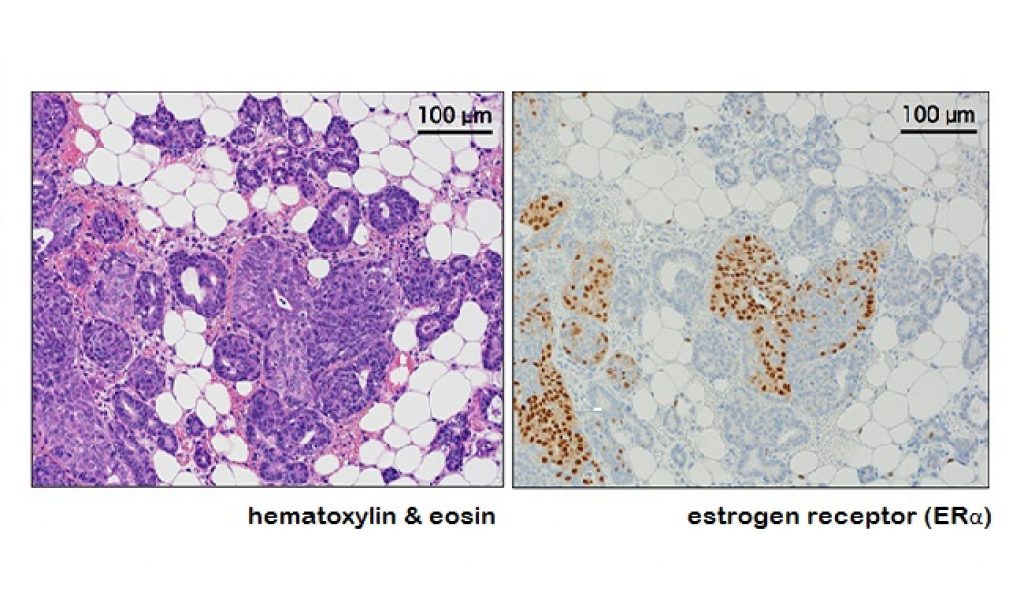
While studying the function of Nrk, a protein kinase encoded in the X chromosome, Professor Masayuki Komada’s group at the Tokyo Institute of Technology observed that Nrk-mutant female mice frequently exhibited breast tumors after repetitive pregnancies or births. The absence of tumors in virgin Nrk-mutant mice strongly suggests that the tumorigenesis is closely related to the proliferation of mammary epithelial cells during pregnancy.
In addition, blood estrogen levels at the late stages of pregnancy were found to be about two times higher in Nrk-mutant mice than in wild-type mice, suggesting that Nrk is also involved in the regulation of synthesis or secretion of estrogen.
Considering that breast tumors in Nrk-mutant mice and humans (luminal B, a type of estrogen receptor–positive breast cancer) display a similar gene expression pattern, the findings of this study may help researchers better understand the mechanisms of human breast cancer suppression.
The article can be found at: Yanagawa et al. (2016) Deficiency of X-linked Protein Kinase Nrk During Pregnancy Triggers Breast Tumor in Mice.
———
Source: Tokyo Institute of Technology.
Disclaimer: This article does not necessarily reflect the views of AsianScientist or its staff.