AsianScientist (Jun 25, 2014) – Microscopic creatures that live on tiny ocean plastics greatly affect the fate and ecological impacts of marine plastic pollution, according to researchers from the University of Western Australia.
PhD candidate Julia Reisser and colleagues have published an article in the journal PLOS One that contributes many new records of microbes and invertebrates living on sand-sized marine plastics.
Winthrop Professor Chari Pattiaratchi, Ms. Reisser’s PhD supervisor, said there were huge numbers of floating plastics at sea and the study was the first to document biological communities on pieces from Australian waters. The tiny ocean plastics come from the breakdown of discarded plastic items, such as single-use packaging and fishing gear.
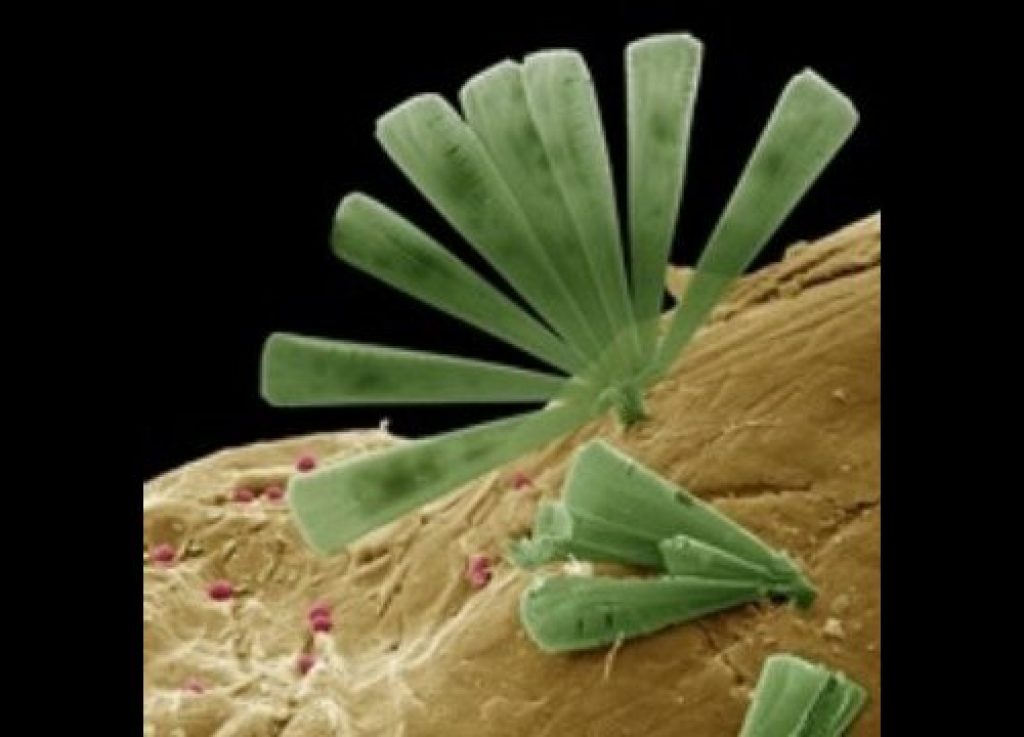
More than 1,000 images were taken while examining ocean plastics from Australia-wide sample collections using a scanning electron microscope at UWA’s Centre for Microscopy, Characterisation and Analysis.
The good news is that some of the plastic inhabitants may decrease plastic pollution level at the sea surface, where major environmental impacts occur.
Study co-author Dr. Jeremy Shaw said large numbers of silica-forming algae weighed down their plastic host, potentially causing tiny pieces to sink to the bottom of the ocean. The researchers were also able to see colonies of microbes that seem to be “eating plastics”.
“Plastic biodegradation seems to happen at sea. I am excited about this because the ‘plastic-eating’ microbes could provide solutions for better waste disposal practices on land,” Ms. Reisser said.
But she also said “epiplastic” organisms could also make ocean plastics more attractive as food for animals, inducing plastic ingestion and negative impacts. Furthermore, species living on ocean plastic could disperse across oceans, potentially invading new habitats and impacting local ecosystems.
The article can be found at: Reisser et al. (2014) Millimeter-Sized Marine Plastics: A New Pelagic Habitat for Microorganisms and Invertebrates.
——-
Source: University of Western Australia.
Disclaimer: This article does not necessarily reflect the views of AsianScientist or its staff.