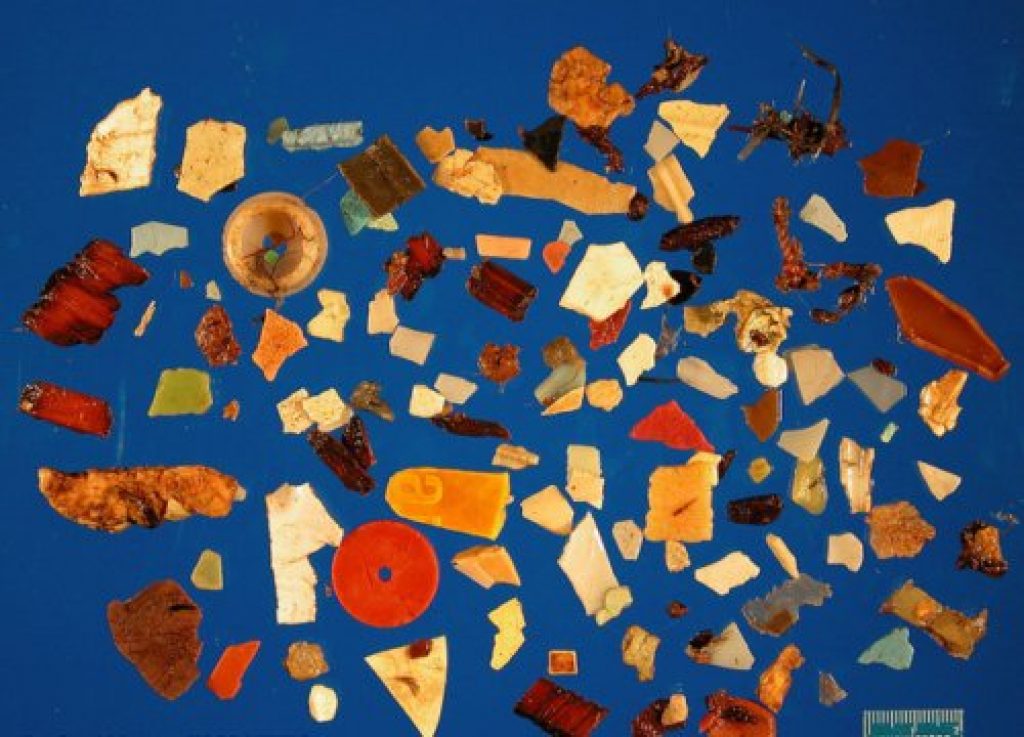
AsianScientist (Jul 17, 2014) – Plastic pollution in the open ocean is widespread but less than predicted, according to a study published in the journal Proceedings of the National Academy of Sciences.
Co-authored by the Director of The University of Western Australia (UWA)’s Oceans Institute, Winthrop Professor Carlos Duarte, the study suggests that there is an unknown sink for small plastic particles.
A gyre is a large system of rotating ocean currents, particularly those involved with large wind movements. Prof. Duarte said the study confirmed plastic pollution was widespread in the ocean and verified the prediction that there were five areas of elevated accumulation in each of the five subtropical gyres of the ocean. The plastic concentrations in these gyres was similar to that in the North Pacific Gyre, and therefore not unique in supporting comparatively high plastic pollution.
The study states that mass production technologies for plastics emerged in the mid-1900’s, after which scientists began observing accumulations of plastic waste in the world’s oceans. The concentration of plastic debris in ocean samples initially kept pace with increasing plastics production, but levelled off in the 1980’s in spite of continued increases in plastics production and disposal.
To investigate this apparent paradox, lead author Andrés Cózar from the Universidad de Cádiz and his colleagues measured plastic debris contained in ocean surface samples collected during the Spanish Circumnavigation Expedition Malaspina 2010, a nine-month expedition to assess the impact of climate change on the world’s oceans.
The authors collected 3,070 ocean surface samples at 141 sites around the world and found that 88 percent of the samples contained plastic debris of varying sizes with highest plastics concentrations in the five subtropical ocean gyres.
Particle size analysis revealed a low concentration of plastic fragments smaller than one millimeter in diameter in the samples. In addition, the estimated total ocean plastic content, on the order of tens of thousands of tons, was less than previous estimates predicted.
The results suggest that plastic waste debris in the ocean is widespread, but that an unknown mechanism is removing small plastic fragments at a higher rate than larger fragments.
According to the authors, further research is needed to determine which ocean life or systems are responsible for the disappearance of small plastic fragments and how they may be affected by exposure to or ingestion of plastic waste.
The article can be found at: Cózar et al. (2014) Plastic debris in the open ocean.
——-
Source: University of Western Australia; Photo: U.S. Fish and Wildlife Service/Flickr/CC.
Disclaimer: This article does not necessarily reflect the views of AsianScientist or its staff.