AsianScientist (Dec. 19, 2013) – Native ants living in cacao trees in Indonesia that are often seen as pests in fact seem to boost their yields, according to a study.
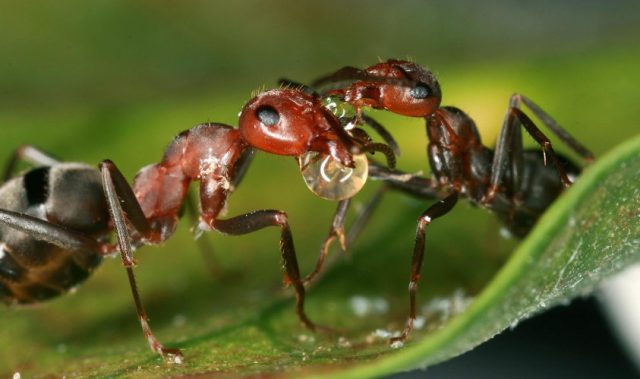
Scientists from Germany, Indonesia and Sweden studying how ant communities affect cocoa yields in Sulawesi found that trees with abundant native ants (Dolichoderus) produced the best yields. In contrast, the yields of cacao trees where ants were excluded were 27 percent lower and those in which an invasive, foreign ant species (Philidris) were introduced had yields that were 34 percent lower.
The results were published in the Proceedings of the Royal Society B.
Arno Wielgoss, the study’s lead scientist from the University of Göttingen, Germany, tells SciDev.Net that ants live in a mutualistic partnership with the mealybugs — insects that suck plant nutrients and excrete sugar to their guardian ants. But they also protect the cocoa pods from even more destructive pests such as cocoa pod borers and Helopeltis bugs.
The invasive Philidris ants transmit the fungus-like plant pathogen Phytophthora and so the heaviest yield loss, according to the study. These ants collect pieces of Phytophthora-infected cocoa pods to build protective tents over the mealy bugs. Philidris ants and their tent materials harbor infectious Phytophthora spores with which the ants contaminate fresh cocoa pods.
Indonesia is the world’s third biggest cocoa producer. But increased pest attacks and aging trees have slashed its production this year.
Worldwide, cocoa farmers struggle against severe but geographically limited pest infestations. Ants, which form part of the complex network of life in cocoa farms, are often seen as pests.
Farmers often dislike ants, according to Stacy Philpott, an associate professor in agroecology at the University of California, Santa Cruz, who studies insects in another tree crop, coffee. She said that the study is important in advancing the understanding of the ecological roles that ants play.
Wielgoss warns that insecticide spraying could hasten Philidris dominance as “insecticides harm other ant species more than Philidris that are protected in their tents”. The spread of Philidris, he adds, would also be likely to aggravate Phytophthora infection.
Despite this, the effects of having Dolichoderus ants may vary, as a Malaysian Cocoa Board officer says that untreated cacao trees produce only half the yields of trees with ant treatment.
“Translating scientific results into practice can be difficult despite vigorous research. Farmers face many challenges and farmers who manage ant communities are also managing pests,” said Philpott.
The article can be found at: Wielgoss A et al. (2013) Interaction complexity matters: disentangling services and disservices of ant communities driving yield in tropical agroecosystems.
——
Source: SciDev.Net; Photo: Yao-Hua Law/CC.
Disclaimer: This article does not necessarily reflect the views of AsianScientist or its staff.