Asian Scientist (Jul. 23, 2013) – Australian and UK researchers have gained new insights into the early stages of our immune response in a breakthrough that may lead to novel treatments for diseases from multiple sclerosis to cancer.
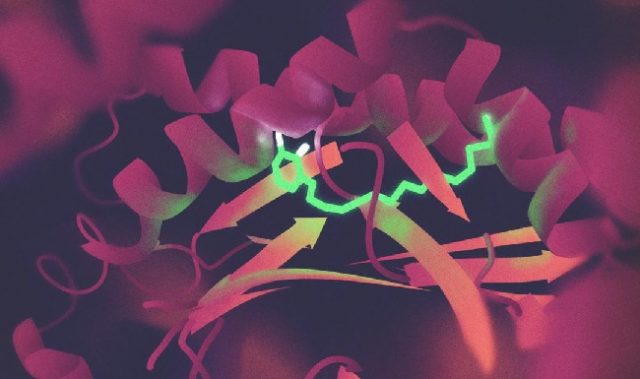
In their study, published in Nature Immunology, the team of researchers characterized for the first time how interferon beta (IFNβ) proteins bind to cells and activate an immune response.
Produced when viral and bacterial infections are detected, interferon proteins are vital to the body’s defences. They activate immune cells, such as macrophages, interfere with virus replication, and boost cells’ resilience to infection. They also enhance later immune responses to cancers and other stresses.
There are at least 20 subtypes of interferons that are produced at different stages of the immune response. They appear to have different functions, but these functions and their triggers are generally not well understood. The mapping of the IFNβ – cell interaction is a breakthrough in the field.
Professor Paul Hertzog, a leader of the study, said interferon function was vital for developing and refining therapies for incurable diseases such as lupus and multiple sclerosis.
“Interferon therapy is useful in treating a number of diseases; however these treatments have dose-limiting side effects,” said Professor Hertzog.
“The more refined our understanding of interferon function, the more we can tailor treatments to optimize effectiveness – whether by boosting or blocking their actions.”
Dr Nicole de Weerd, the lead author of the paper, said the research provided new pathways for rational drug design.
“We found that when IFNβ binds to a cell, it transmits an unusual signal that seems linked to some of the toxic side effects of interferon therapy, like sepsis. This provides a promising avenue to pursue more selective activation of interferon action,” said Dr de Weerd.
The article can be found at: de Weerd et al. (2013) Structural Basis Of A Unique Interferon-β Signaling Axis Mediated Via The Receptor IFNAR1.
——
Source: Monash University; Photo: snre/Flickr.
Disclaimer: This article does not necessarily reflect the views of AsianScientist or its staff.