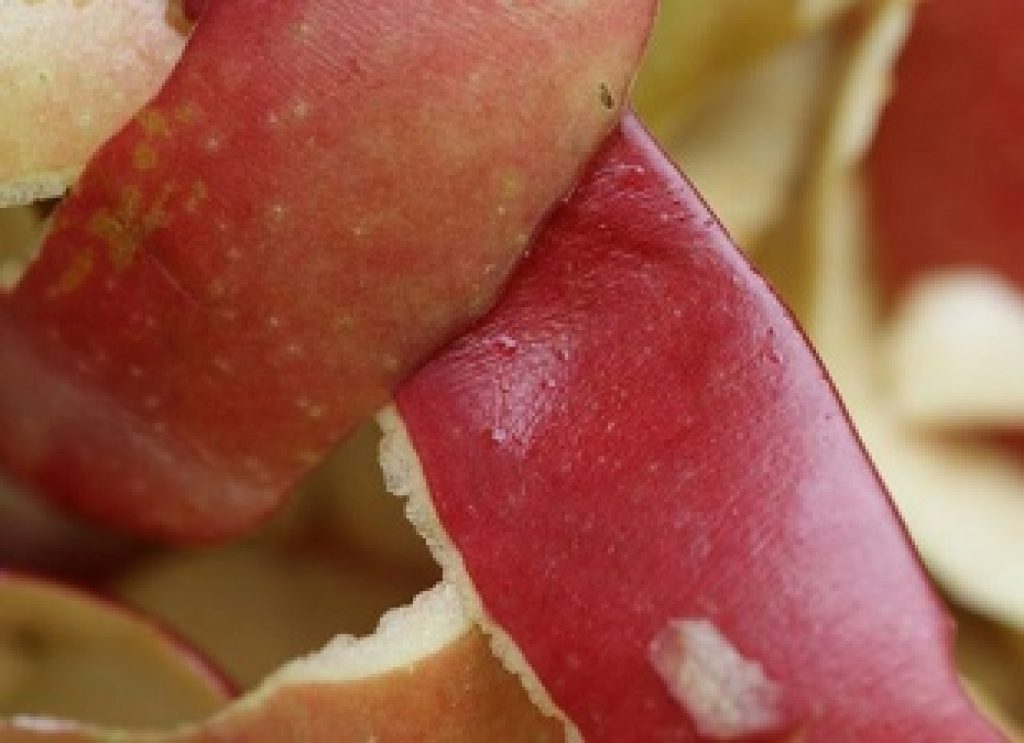
Asian Scientist (Jul. 19, 2013) – Researchers at the National University of Singapore (NUS) have shown that apple and tomato peels can be used to remove pollutants in water. The discovery suggests that such easily available materials can be used for water treatment in communities where there is little electricity or no access to water purification facilities.
One of the most crucial problems affecting the world today is the scarcity of potable water. This problem is expected to worsen in the future because of over usage, lack of conservation and dwindling natural supplies of clean water, even in countries with significant water resources.
Furthermore, most water purification technologies available today are not easily accessible to economically disadvantaged communities around the world.
The challenge, therefore, is to develop robust water purification methods that can carry out water treatment at low cost, with minimal energy consumption and using fewer chemicals in the process in order to reduce the negative impact on the environment.
Mr Ramakrishna Mallampati, a PhD candidate at NUS, tested various cheap and easily available materials and found that apple and tomato peels can effectively remove various pollutants that were dissolved in water. These contaminants included organic chemicals, dyes and pesticides.
He found that tomato and apple peels removed the dissolved contaminants through the process of adsorption. By further optimizing the conditions under which the peels were able to adsorb and extract the pollutants, he was able to determine how the peels can be used in large-scale water purification applications.
Furthermore, to enhance the ability of apple peels to extract negatively charged pollutants, he immobilized naturally occurring zirconium oxides onto the surface of apple peels and found that this method was able to extract negatively charged ions such as phosphate, arsenite, and chromate ions from aqueous solutions.
Mr Ramakrishna and Associate Professor Suresh Valiyaveettil, who supervised the research, hope that their discovery can benefit farmers living in remote villages who depend on contaminated ground water or local rivers for their daily water needs.
They intend to work with non-governmental organisations to transfer their research findings and knowledge to benefit these communities.
The research group is now looking into the use of other fruit peels and natural fibers for water purification.
The article can be found at: Mallampati R et al. (2013) Apple Peels — A Versatile Biomass for Water Purification?
——
Source: NUS; Photo: Mary deB/Flickr.
Disclaimer: This article does not necessarily reflect the views of AsianScientist or its staff.