
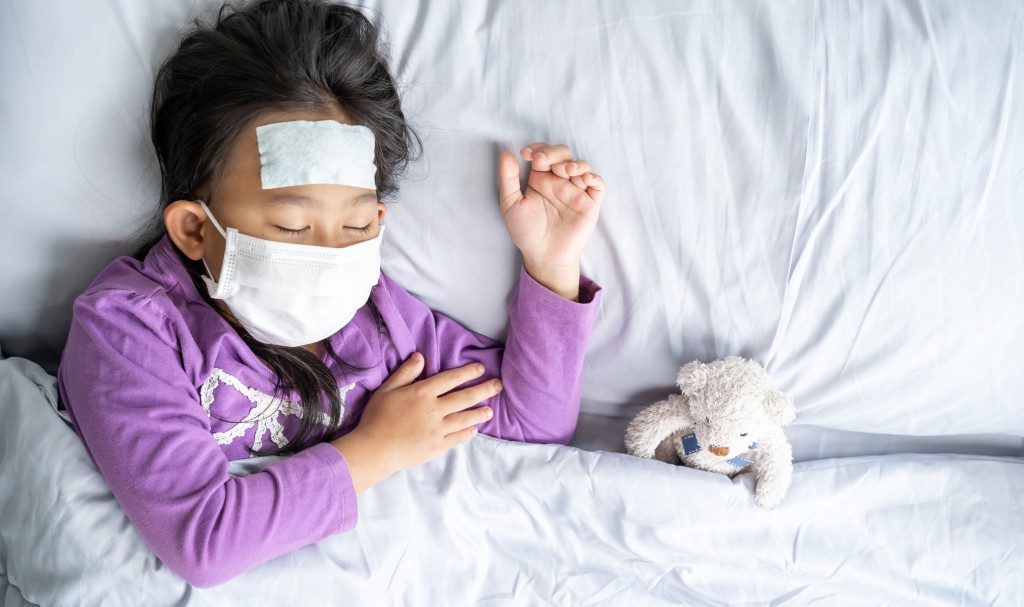
AsianScientist (Oct. 26, 2026) –Certain fertility treatments may be linked to an increased risk of Kawasaki disease in children before age five, according to a large-scale study from Japan. Kawasaki disease is a systemic inflammatory disease that primarily affects young children and is a leading cause of acquired heart disease in children. Its exact cause remains unclear.
Researchers from the University of Osaka and the Osaka Women’s and Children’s Hospital examined whether the method of conception was associated with the risk of developing Kawasaki disease during early childhood.
“Kawasaki disease remains an important cause of acquired heart disease in children, yet its causes are still not fully understood,” said Ryo Kawasaki, a professor at the Graduate School of Medicine, Osaka University; and an author of the study.
The findings, published in JAMA Network Open, suggest that the relationship may differ depending on the fertility treatment used.
Comparing fertility treatments
The team, led by Sachiko Baba from the Osaka Women’s and Children’s Hospital, analyzed data from 101,864 children enrolled in the Japan Environment and Children’s Study (JECS) — a nationwide prospective birth cohort. (Sachiko Baba is the Director of the Division of Community Health & Research, Maternal and Child Health Information Center at the Osaka Women’s and Children’s Hospital.)
The children were grouped according to how they were conceived: spontaneously, or following ovulation induction, intrauterine insemination (IUI), in vitro fertilization (IVF), or intracytoplasmic sperm injection (ICSI).
Over five years of follow-up, 1,226 children developed Kawasaki disease.
Compared with children conceived spontaneously, those conceived following ovulation induction, IUI and IVF had higher rates of Kawasaki disease during the five-year follow-up. The estimated rates were 57 percent, 48 percent and 53 percent higher, respectively. No clear difference was found among children conceived through ICSI.
The associations were broadly unchanged after the researchers accounted for maternal conditions that could potentially influence the findings, including endometriosis, polycystic ovary syndrome, allergic conditions and autoimmune disease.
Association does not mean causation
The findings do not establish that fertility treatments cause Kawasaki disease. The authors emphasize that the findings require confirmation in other populations. The results highlight a nuanced relationship between fertility treatments and child health, showing that the association with Kawasaki disease differs by treatment type.
The researchers say the findings should be confirmed in other populations before their implications for children conceived through fertility treatment can be fully understood.
“Further investigation of the association between fertility treatments and Kawasaki disease may help clarify the mechanisms underlying the disease,” Ryo Kawasaki said.
—
Source: Osaka Women’s and Children’s Hospital ; Image:
The study can be found at: Fertility Treatments and the Risk of Kawasaki Disease Among Offspring
Disclaimer: This article does not necessarily reflect the views of AsianScientist or its staff.