AsianScientist (May 14, 2018) – An international research group has revealed that people with similar social status in similar age groups are more likely to clash with each other. Their findings are published in the Proceedings of the National Academy of Sciences.
Competition, while often seen as beneficial, can escalate into destructive conflict. This occurs, for instance, when athletes sabotage each other, or when rival executives get caught up in a career-derailing fight.
Such escalations, which lead to conflict, are especially likely among similar-status competitors, say researchers at the Korea Advanced Institute of Science and Technology (KAIST), the US Treasury, INSEAD and the European School of Management and Technology.
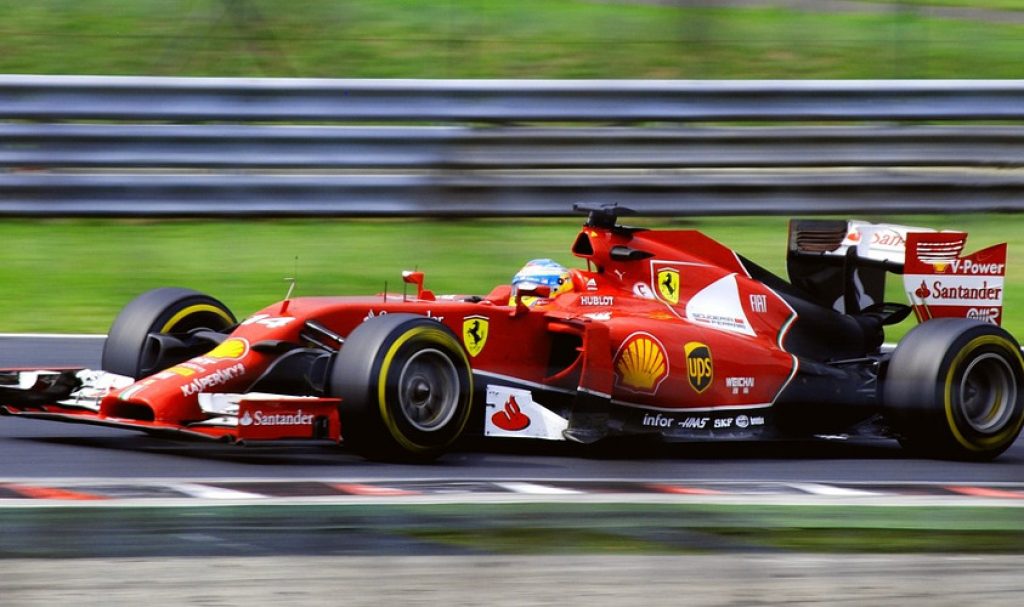
The scientists examined the link between status similarity and conflict as well as the conditions under which this link holds by using panel data on Formula 1 (F1) races from 1970 through 2014. For the study, the research team analyzed a total of 506 collision cases by 355 F1 drivers over 45 years. Using the F1 data, the research team modeled the probability that two drivers would collide on a racetrack as a function of their structural equivalence in a dynamic network of competitive relationships.
The team found that similar-status F1 drivers are more prone to collide, especially when they are age-similar, performing well and feeling safe. When these boundary conditions are met, structural equivalence likely triggers antagonism among interactants.
This research deepens our understanding of when violent conflict emerges and when prevention efforts are called for.
“We fully understand that the drivers who ranked first and second are likely to have more conflict because they meet more frequently and know each other well. We also regulated all those conditions and confirmed that our hypothesis was correct throughout the data analysis,” Lee added.
The study suggests that new work will benefit from examining how demographic overlap, network stability and perceived costs of conflict ‘activate’ a structurally equivalent relationship to the point that it is not only salient but also conducive to conflict.
“Sociology mainly investigates the positive results of social success and collaboration. This study shows that any violent activities, including homicide, also have something to do with organizational and social structural equivalence,” said Lee.
The article can be found at: Piezunka et al. (2018) Escalation of Competition into Conflict in Competitive Networks of Formula One Drivers.
———
Source: Korea Advanced Institute of Science and Technology; Photo: Pixabay.
Disclaimer: This article does not necessarily reflect the views of AsianScientist or its staff.